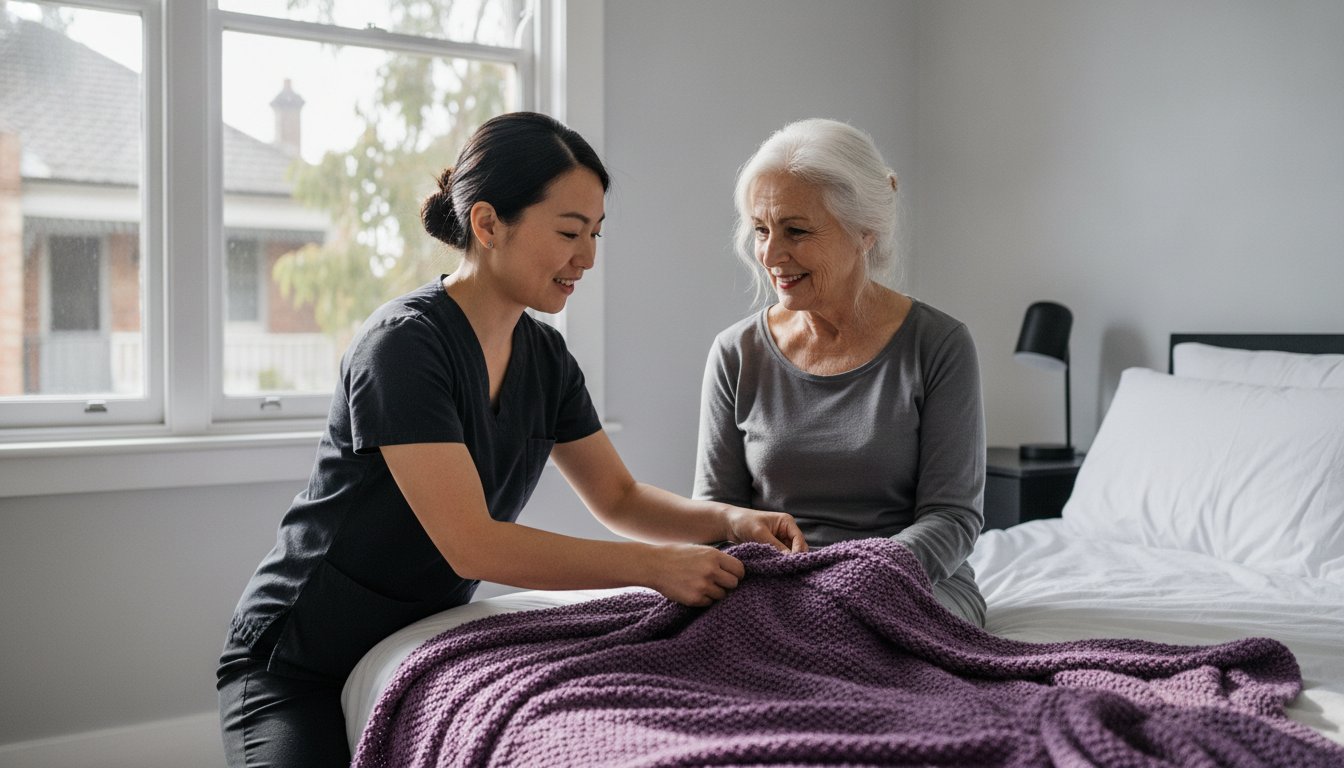
Is your loved one’s safety determined by their medical diagnosis, or by their physical ability to bear weight? Many families feel a sense of uncertainty when a care assessment introduces complex manual handling terms. Choosing between a two-person team and one person assist personal care often feels like a high-stakes decision between safety and your household budget. You want to provide the best support while avoiding the fear of hidden costs in a care package.
We understand that clarity is essential for your peace of mind. It’s natural to worry about whether a single carer can manage transfers safely or if a second worker is a clinical necessity. This guide provides the practical criteria you need to select the right level of assistance. You’ll learn how to ensure safe manual handling at home and how to achieve fixed-price certainty under Australia's Support at Home program. We will break down the differences in mobility requirements, the impact of national "No Lift" policies, and how to maintain dignity during daily routines.
Key Takeaways
- Identify the specific physical criteria for one person assist personal care, focusing on the client's ability to bear weight and use transfer aids.
- Recognize the safety thresholds that necessitate a two-person assist, such as the use of full hoists for non-weight-bearing individuals.
- Discover how manual handling tools like sit-to-stand devices and slide sheets enable safe and dignified transfers with a single carer.
- Evaluate how cognitive status and daily energy levels influence the decision between one-assist and two-assist support models.
- Learn how transparent, fixed-price personal care packages in Melbourne provide financial certainty without hidden administrative percentages.
Defining One Person Assist in Personal Care
A one person assist personal care arrangement is a targeted support model where a single professional carer manages all manual handling and hygiene tasks. This structure is designed for individuals who retain a level of physical independence but require stability to complete daily routines. It isn't just about presence; it's about active, safe coordination between the carer and the person receiving support. In a Melbourne home setting, this typically involves assistance with showering, dressing, and moving between rooms.
Safety is the primary driver for this classification. For a one-person assist to be viable, the environment must be assessed to ensure the carer can perform tasks without physical strain. This level of care prioritises the dignity of the individual by providing the minimum necessary intervention to maintain independence. It ensures that personal support remains a fundamental necessity rather than an over-serviced luxury. By limiting the team to one carer, the routine remains personal and less intrusive for the household.
The Role of the Personal Care Attendant
Personal care attendants are often classified as unlicensed assistive personnel who focus on Activities of Daily Living (ADLs). Their role is defined by strict professional boundaries. They aren't there for clinical nursing; they're there for foundational support. Before any routine begins, a safety assessment is mandatory. This identifies potential hazards like loose rugs or cramped bathrooms that could compromise a one-person transfer. Carers focus on maintaining skin integrity and hygiene through structured morning or evening visits. They monitor for changes in physical condition while ensuring the client's basic needs are met with precision and respect.
Weight-Bearing and Mobility Thresholds
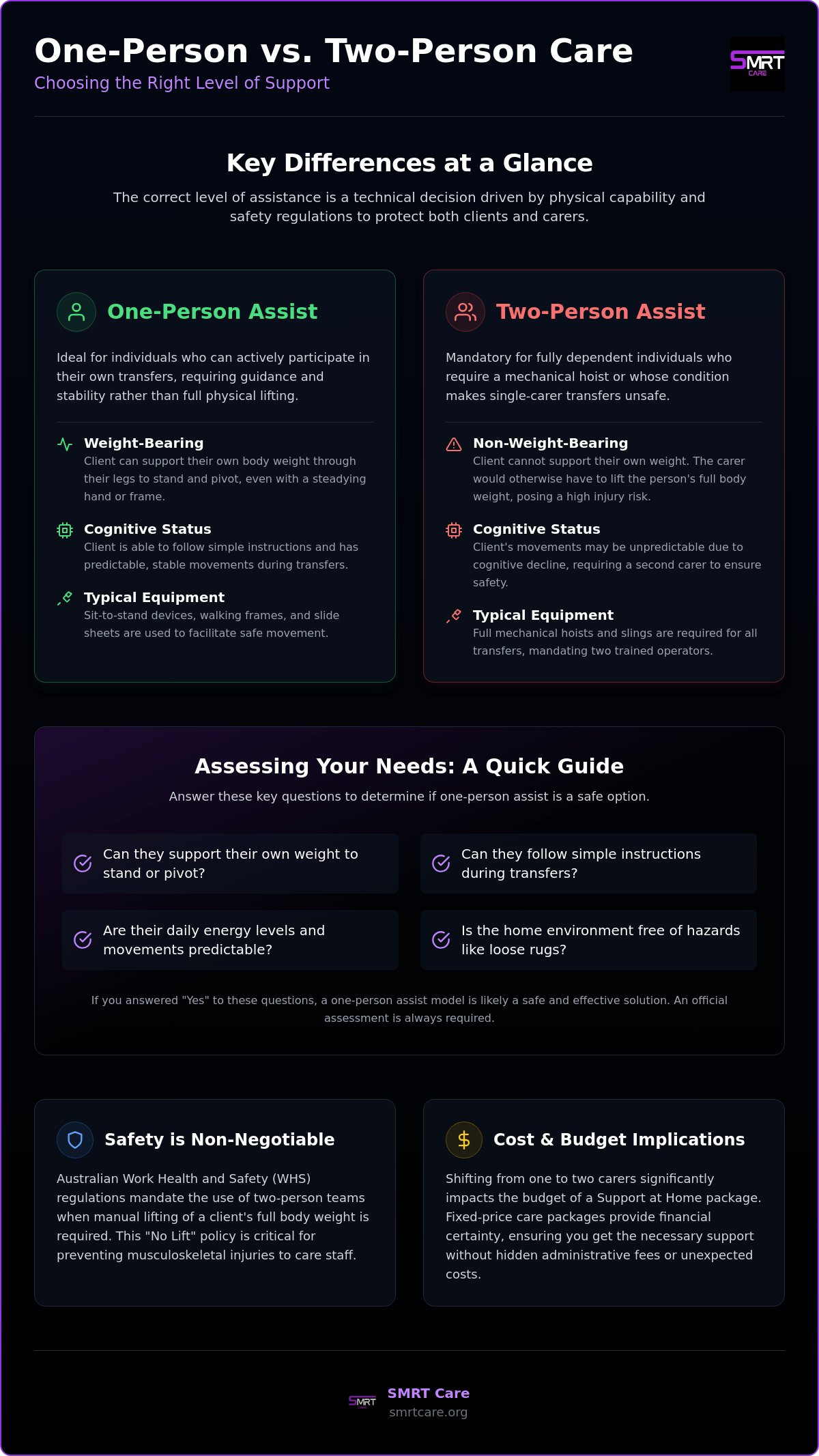
The term 'weight-bearing' is the pivot point for care levels. It means the client can support their own body weight through their legs, even if they require a steadying hand or a frame. If a client can stand and pivot, a single carer can safely manage the transfer. This ability is essential for one person assist personal care to remain safe under Australian WHS regulations. Common thresholds include:
- The ability to stand from a seated position with minimal physical lifting from the carer.
- Using a sit-to-stand aid or a walking frame independently.
- Stability while seated on a shower chair or the edge of a bed.
Transitioning to a two-person assist occurs when the client can no longer support their weight. If the carer must lift the person's full weight, the risk of injury increases. In these cases, the support model must change to ensure the safety of everyone involved.
Key Differences: One Person Assist vs Two Person Assist
The distinction between one and two-person support isn't based on personal preference. It's a technical decision driven by risk assessment and physical capability. In Australia, Work Health and Safety (WHS) regulations mandate that assist levels must eliminate or minimise the risk of musculoskeletal injuries to staff. The primary differentiator is the physical effort required to move or stabilise a client. While one person assist personal care is suitable for those who can contribute to their own movement, a two-person team becomes mandatory the moment a client can no longer support their own weight or requires a full mechanical hoist.
Comparison of Physical Requirements
Determining the correct support level requires a clear look at mobility. A one-person assist is appropriate when a client is weight-bearing. This means they can stand and pivot, perhaps using a walker or a steadying aid. According to specific one-person assist criteria, the client must also be able to follow simple instructions and maintain a predictable level of physical stability during the transfer. A single carer must never manually lift a client's full body weight in a home setting to prevent spinal injuries.
Conversely, a two-person assist is required when the client is fully dependent. This includes scenarios where a mechanical sling or full hoist is necessary for transfers. If a client's movements are unpredictable due to cognitive decline or if they are completely non-weight bearing, two carers must be present to manage the equipment and ensure the client's body is positioned safely. Safety isn't a suggestion; it's a legal requirement for professional providers.
Cost and Scheduling Implications
The shift from one carer to two has a direct impact on the budget of a Support at Home (SAH) program. In Melbourne, coordinating two staff members for a single visit increases logistical complexity. It requires precise scheduling to ensure both carers arrive simultaneously, which can sometimes lead to narrower windows for service delivery. For families, this often means a higher hourly cost because you're paying for the expertise and time of two professionals rather than one.
Many providers add complex tiered percentages or hidden management fees for multi-carer visits. Choosing fixed-price visits for one person assist personal care or two-person support provides much-needed financial certainty. This transparency allows you to plan your quarterly budget under the SAH program without worrying about administrative surcharges. Understanding these logistical realities helps you choose a care level that balances safety with the long-term sustainability of your funding.
Assessing Your Needs: When is One Person Enough?
Determining if one person assist personal care is appropriate requires an objective look at both physical and cognitive factors. It isn't a static decision. A person’s support needs can change based on the time of day, their energy levels, or the progression of a condition. Professional assessments, typically conducted by an Occupational Therapist (OT) or a care manager, provide the baseline for these requirements. They evaluate how much weight a person can bear and whether they can follow safety instructions during a transfer. If the person can consistently participate in the movement, a single carer is often sufficient.
Cognitive health plays a decisive role in this assessment. For a one-person assist to remain safe, the individual must be able to follow simple, sequential commands. If memory loss or confusion leads to unpredictable movements, the risk of a fall increases. In these scenarios, a second carer is often required to provide stability and reassurance, even if the person is physically capable of standing. Safety at home depends on this balance of physical strength and mental clarity.
The 'Good Day vs. Bad Day' Rule
Care planning must account for the lowest level of mobility rather than the best. A person might be able to stand independently in the morning but experience significant fatigue by the evening. Medication cycles, particularly for conditions like Parkinson’s disease, can also create "off" periods where weight-bearing capacity drops. We recommend planning for these "bad days" to ensure consistent safety. If a person is frequently unable to support their weight during evening routines, a two-person assist may be the more reliable choice for that specific visit. Care plans should evolve as these physical needs change over time.
Home Environment Check
The physical layout of a Melbourne home can dictate the level of assistance required. Narrow hallways or small bathrooms in older terrace houses often limit the space available for manual handling equipment. A safe one person assist personal care routine requires enough floor space for the carer to move freely around the client without obstruction. Environmental modifications can often reduce the need for a second carer. These include:
- Installing high-contrast grab rails in showers and near toilets.
- Ensuring all floor surfaces are non-slip and free of rugs.
- Using height-adjustable beds to assist with the transition from sitting to standing.
- Widening doorways to accommodate walking frames or steadying aids.
A professional OT assessment will identify which modifications are necessary to maintain a one-person support model. By optimising the environment, you can often preserve a person’s independence for longer while keeping care costs manageable under the Support at Home program.
Safety and Manual Handling Equipment for One-Assist Care
Manual handling equipment is the foundation of a safe one person assist personal care routine. Without the right tools, a single carer faces an increased risk of musculoskeletal injury, and the client faces a higher risk of falls. Equipment acts as a mechanical bridge. It allows a carer to facilitate movement by using leverage and glide rather than raw physical strength. This approach complies with Australian "No Lift" standards while preserving the client's dignity during daily transfers.
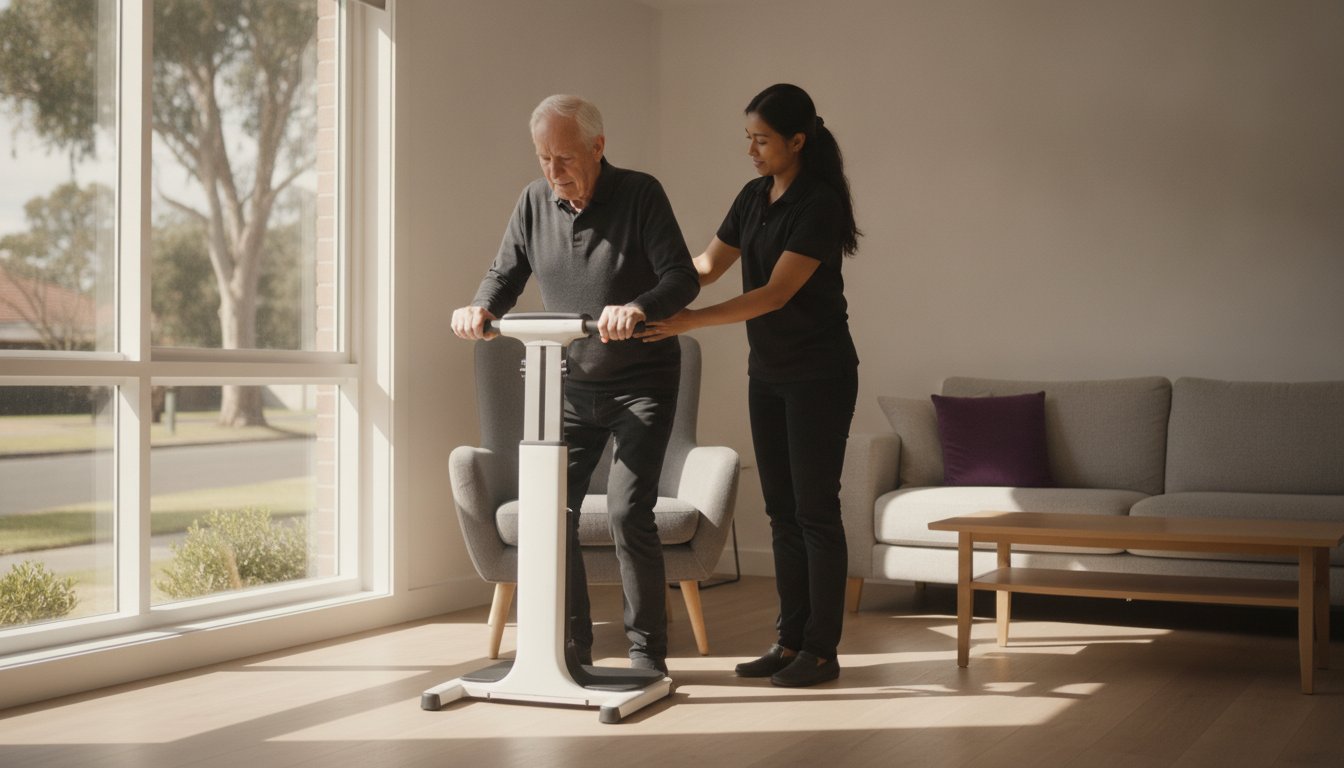
Sit-to-stand aids, such as the Sara Stedy, are essential for weight-bearing clients. These devices allow a person to pull themselves into a standing position while a carer secures the equipment. Once the client is upright, the carer can easily transport them to a bathroom or chair. For tasks involving an In-bed Wash or repositioning, slide sheets are the industry standard. They reduce friction between the client and the bed linens. This allows a single professional to move a client higher in bed or turn them for hygiene tasks without straining their back.
Training is a non-negotiable requirement for using these tools. A carer must understand the specific mechanics of each device to ensure safety. In Australia, manual handling training often requires annual refreshers to maintain competency. This ensures that the carer knows how to inspect equipment for wear and how to apply the correct techniques for different body types and mobility levels.
One-Person Transfer Techniques
Safe transfers rely on controlled, predictable movements. The pivot transfer is a common technique where the carer assists the client in standing, turning, and sitting in one fluid motion. Gait belts are often used during these short-distance movements to provide a secure point of contact. They give the carer a stable handle to guide the client without pulling on their limbs or clothing. A sit-to-stand aid provides a mechanical advantage by using a pivoting seat and handle system to support the client's weight while the carer provides directional guidance. These techniques ensure that one person assist personal care remains a viable and safe option for the home.
Equipment Maintenance and Safety
Reliable equipment requires regular maintenance. Carers perform visual checks before every use to identify frayed straps, cracked frames, or failing brakes. In Melbourne, mobility resellers like Aidacare or local independent living centres provide servicing and replacement parts for manual handling gear. It is also vital to keep the home environment clear. A cluttered floor can prevent the wheels of a transfer aid from moving smoothly, creating a tipping hazard. Regular assessments of the equipment and the space it occupies are necessary to maintain a high standard of care safety.
If you need assistance with daily routines using professional techniques, you can book a One Assist Visit to ensure your safety and comfort at home.
SMRT Care Personal Care Packages in Melbourne
SMRT Care provides a grounded approach to in-home support. We offer pragmatic, fixed-price packages for One Assist and Two Assist visits. This model removes the complexity often found in the care industry. Our focus remains on fundamental support that prioritises the dignity of every client. We treat personal care as a necessity, not a luxury. If a client requires help with a morning shower and can stand with a frame, a One Assist Visit is the logical choice. Our service is designed to be direct, honest, and highly functional.
Our professional Personal Care Attendants are trained in current Australian safety standards. They understand the technical nuances of manual handling. This expertise ensures that one person assist personal care is delivered with precision and safety. Reliability is a core component of our service. We maintain strict scheduling to provide consistent support for Melbourne families. You can rely on a disciplined partner that values integrity and operational efficiency.
Transparent Pricing for Melbourne Families
The transition to the Support at Home program on November 1, 2025, changed how funding is managed across Australia. SMRT Care simplifies this new landscape by offering transparent rates. We don't use hidden fees or complex tiered percentages. This clarity helps families manage their quarterly budgets effectively. You know exactly what you're paying for each visit. For those waiting on government funding, our private-pay packages provide immediate support. This ensures that essential needs are met without delay. Consistency in care delivery is vital for stability. Our Melbourne-based teams are focused on practical impact and accessibility.
Booking a One Assist Visit
Getting started with SMRT Care is a direct process. We begin with an initial assessment to confirm the appropriate assist level for your situation. This step ensures that the home environment and physical requirements match the chosen service. It prevents safety risks and ensures that any necessary equipment is in place. We look at the physical layout of your home and the specific mobility needs of the individual. Once the assessment is complete, we establish a routine that fits your schedule. There is no ambiguity in what we offer; just reliable, professional support.
View our fixed-price One Assist packages to see how we can support your needs with transparency and respect.
Plan Your Support with Confidence and Clarity
Selecting the appropriate level of support depends on weight-bearing capacity and the correct use of manual handling equipment. A technical assessment ensures that the home environment is safe for both the client and the professional carer. Professional one person assist personal care provides an efficient solution for those who retain partial mobility while requiring stability for daily tasks. This model prioritises your dignity by offering the exact level of intervention needed without over-servicing the household.
SMRT Care delivers Melbourne-based professional support with a focus on integrity and operational reliability. We are specialists in manual handling and Activities of Daily Living (ADLs); our team ensures every visit follows established Australian safety protocols. Our fixed-price transparency removes the uncertainty of hidden costs. This allows you to manage your Support at Home budget with total precision. You can rely on our disciplined approach to provide the foundational support your household requires.
View our transparent, fixed-price One Assist care packages to find a support model that fits your physical needs and financial goals. Establishing a safe, structured routine at home is a fundamental step toward long-term independence and peace of mind.
Frequently Asked Questions
Is it safe for one person to shower a senior with limited mobility?
One carer can safely facilitate a shower if the individual is weight-bearing and can follow simple instructions. Safety depends on a pre-service environmental assessment and the use of appropriate aids like shower chairs and grab rails. If the person cannot stand or pivot safely, a two-person assist is required to eliminate the risk of falls or carer injury.
Can I switch from two-person to one-person assist if my health improves?
You can transition to one person assist personal care if a formal re-assessment confirms you have regained sufficient weight-bearing capacity. This often occurs during post-surgical recovery or following successful physical rehabilitation. A care manager will evaluate your current mobility levels to ensure the change remains compliant with Australian WHS safety standards.
What happens if a one-person assist carer determines it's unsafe to proceed?
The carer will pause the service immediately and report the situation to their supervisor if a transfer appears risky. Professional boundaries require that staff do not attempt any manual handling task that exceeds their training or physical limits. We will then review your care plan to determine if a two-person team or different equipment is needed for future visits.
Do I need to provide the manual handling equipment for a one-assist visit?
Clients are generally responsible for providing the personal mobility aids and fixed equipment required within their home. This includes items such as walking frames, shower stools, and sit-to-stand aids like the Sara Stedy. SMRT Care staff are trained to use your existing equipment, provided it is in good working order and has passed a basic safety check.
How much more does a two-person assist visit cost compared to one-person?
A two-person assist visit incurs a higher cost because it requires the simultaneous attendance of two professional carers. While SMRT Care avoids hidden administrative percentages, the rate reflects the dual staffing required for safe transfers. This ensures that non-weight-bearing individuals receive support that meets legal safety requirements without compromising their dignity.
What is the difference between a one-person assist and a basic care visit?
A Basic Care Visit focuses on supervision and minimal physical help with tasks like hair brushing or putting on shoes. A one person assist personal care visit involves active manual handling, such as helping someone stand from a chair or assisting with a full shower. The assist level is determined by the physical effort the carer must provide to ensure a safe transfer.
Are SMRT Care staff trained in using a Sara Stedy or other transfer aids?
Yes, all our Personal Care Attendants receive specific training in using sit-to-stand aids and other manual handling tools. They also maintain competency in using slide sheets for in-bed repositioning and gait belts for walking stability. This training is refreshed regularly to ensure strict compliance with Australian "No Lift" policies and workplace safety regulations.
How do Melbourne's 2026 home care regulations affect assist levels?
Current regulations under the Support at Home program mandate that assist levels must be based on objective risk assessments. Providers are now under increased pressure to demonstrate that manual handling routines protect both the client and the staff member. These 2026 standards ensure that "Zero Lift" protocols are strictly followed in all Melbourne home care settings to reduce workplace injuries.