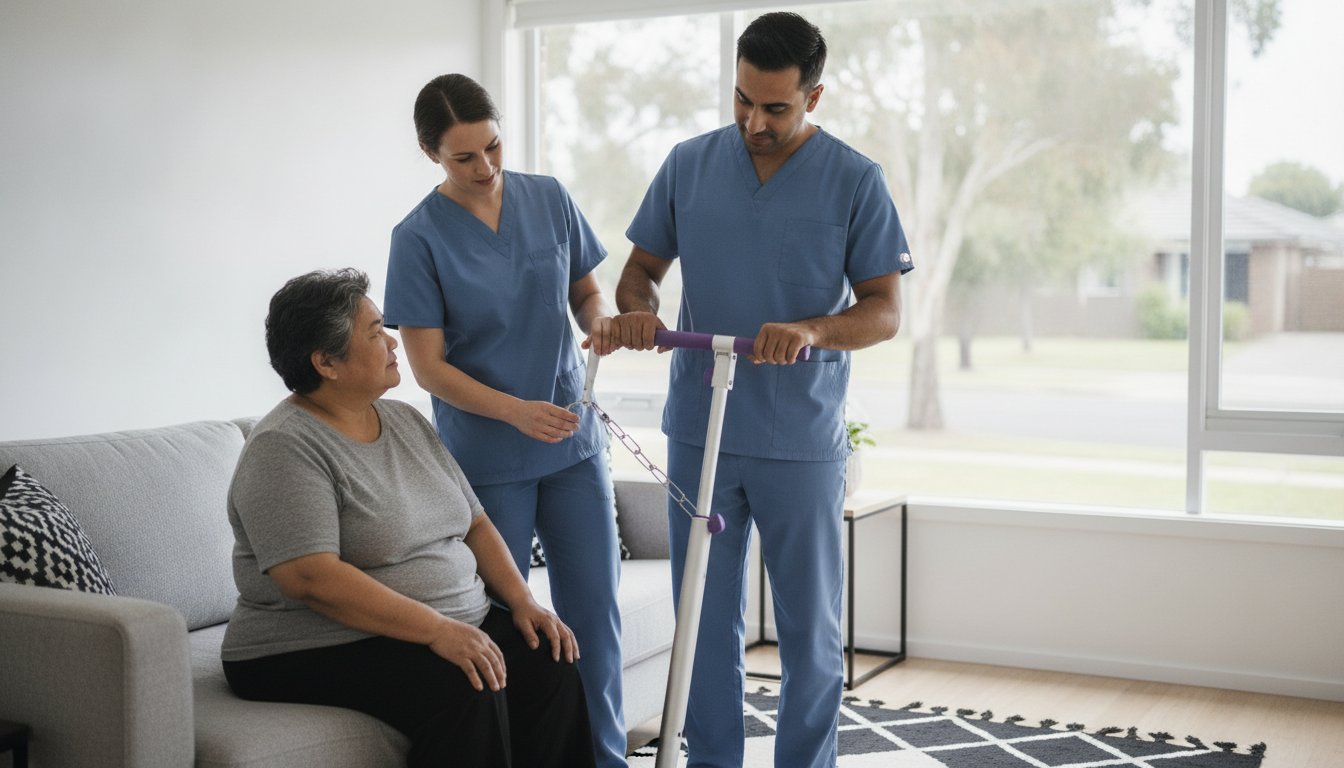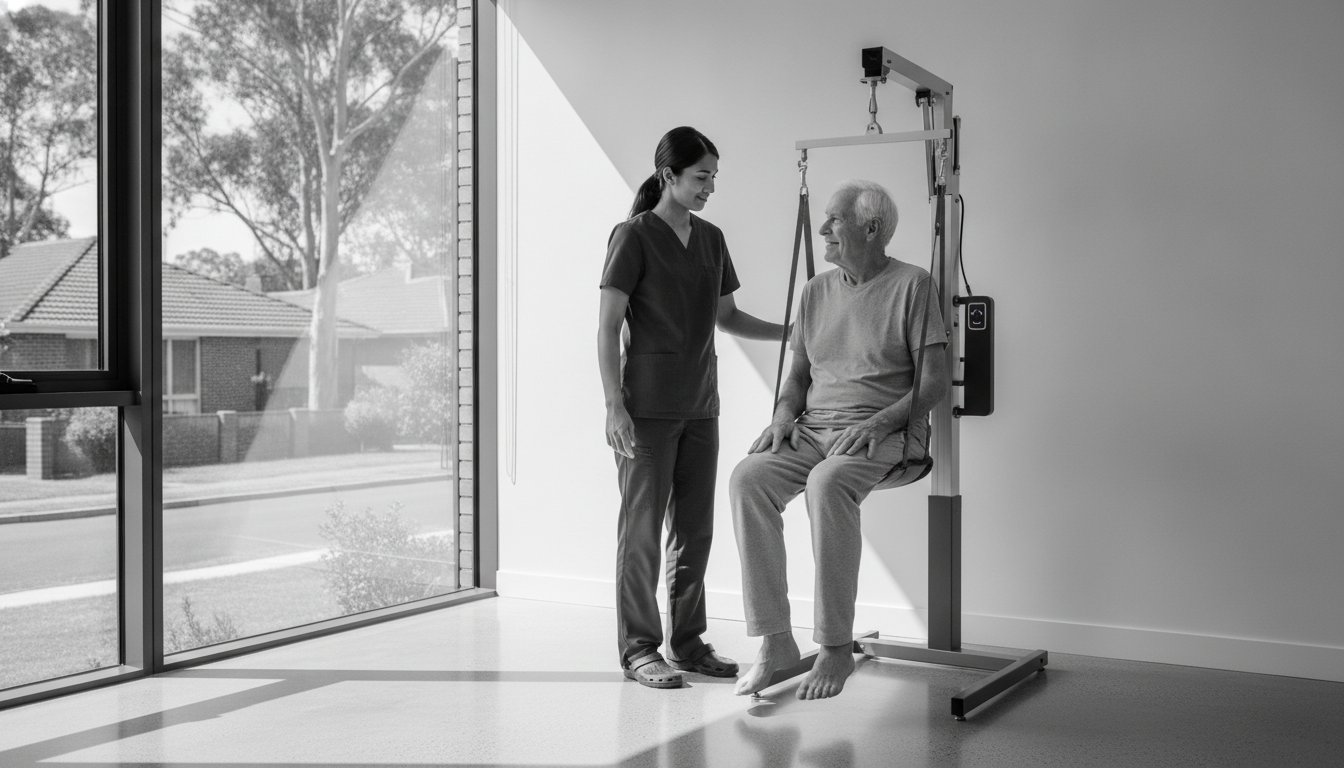
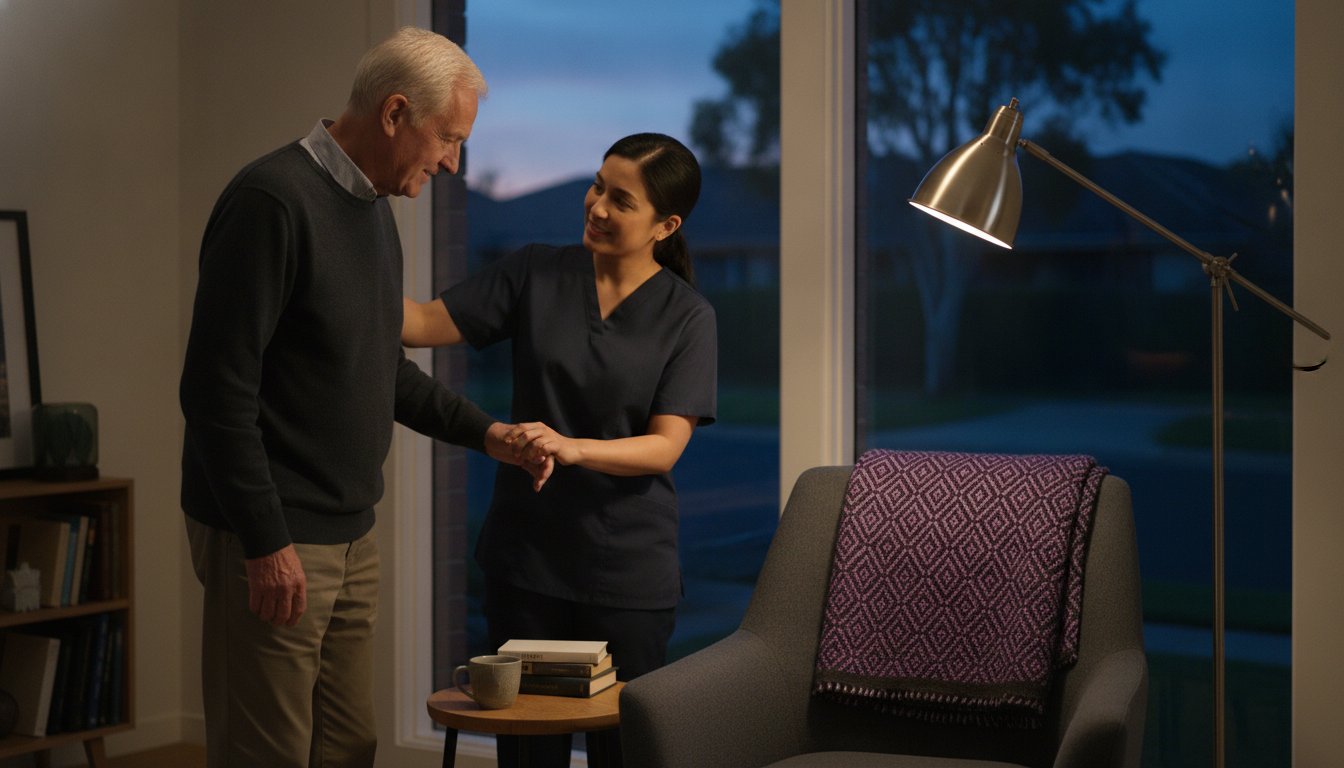
One in four Australians aged 65 and over experience at least one fall every year. Many of these incidents occur during the evening transition when fatigue increases and visibility decreases. Professional bedtime assistance for seniors provides the precise physical support required to navigate these hours with confidence. It is a practical necessity that focuses on stability and foundational safety for those living at home.
The physical demand of evening transfers often creates significant strain for family carers in Melbourne. You likely worry about the risk of a fall during dressing or feel overwhelmed by manual handling equipment like hoists or a Sara Stedy. This guide explains how structured professional support ensures safety, dignity, and physical comfort. You will learn how to establish a repeatable routine and identify which service tier fits your specific needs. We cover everything from basic in-bed washes to complex two-person assists that follow national No Lift standards. This transparency helps you make an informed decision to reduce physical risk and maintain a calm, orderly environment for your loved one.
Key Takeaways
- Professional bedtime assistance for seniors manages the high-risk transition to sleep by providing structured support for evening Activities of Daily Living.
- A typical evening routine takes 45 to 60 minutes and focuses on maintaining dignity through professional dressing and hygiene tasks like in-bed washes.
- Correctly assessing mobility needs ensures you select the right service tier, whether it is a basic visit or a complex two-assist manual handling procedure.
- Using mechanical aids such as hoists or the Sara Stedy replaces physical lifting, significantly reducing the risk of falls and carer strain.
- Transparent, fixed-price care models in Melbourne provide predictable costs for essential physical support without the complexity of traditional agency billing.
What is Bedtime Assistance for Seniors?
Bedtime assistance for seniors is a targeted personal care service. It focuses on the transition from a mobile daytime state to a safe, restful evening. This support involves professional assistance with Activities of Daily Living (ADLs) that occur specifically during the hours before sleep. The primary goal is to ensure physical safety, maintain hygiene, and prevent evening falls. While daytime care often emphasizes engagement, evening care is about foundational stability and preparing the body for rest. It's a pragmatic solution for those who want to remain at home but require physical help to do so safely.
Professional support differs from informal family care in its technical execution. The duties of a caregiver in a professional role include identifying environmental hazards and using correct manual handling techniques. Relying on family members for evening transfers often leads to physical strain and carer burnout. By using professional services, families can maintain their personal relationships while a trained assistant manages the logistical requirements of getting someone safely into bed. This approach prioritizes the dignity of the senior and the health of the family unit. It doesn't just help the individual; it stabilizes the entire household.
The High-Risk Evening Window
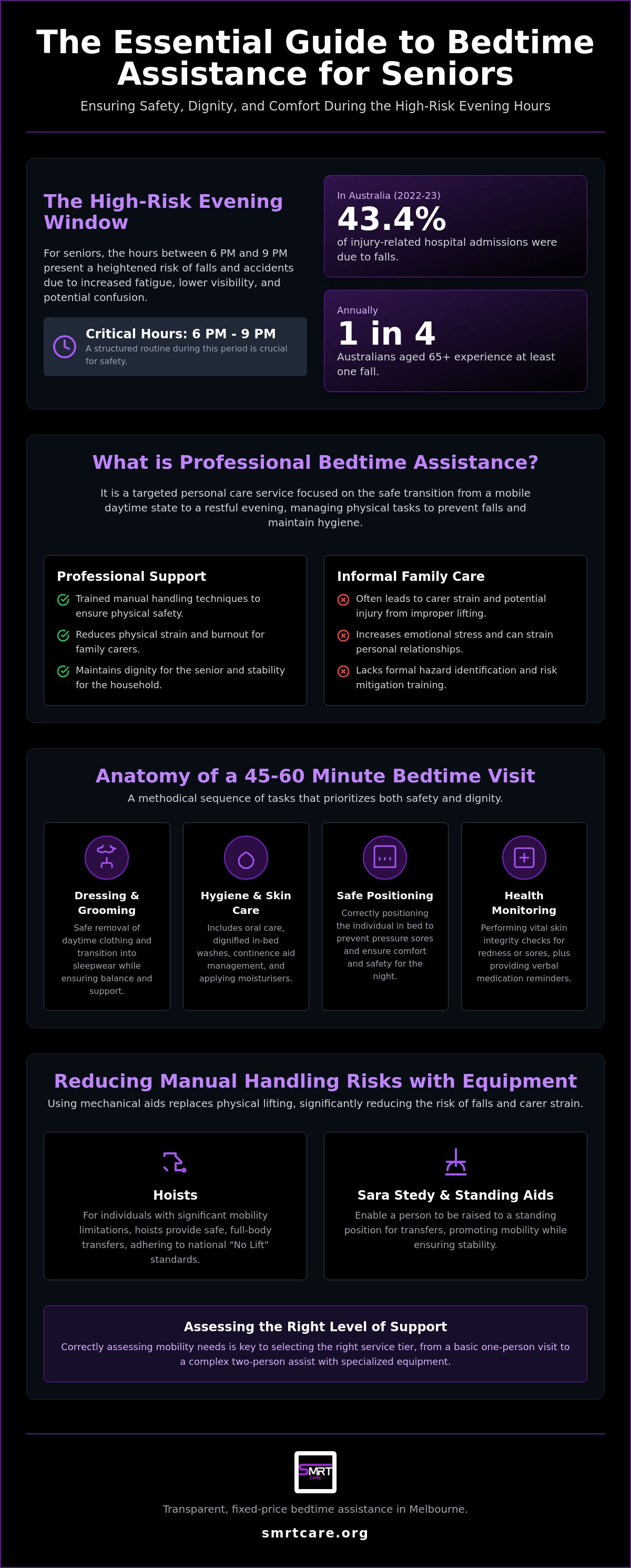
Fatigue increases the risk of accidents between 6 PM and 9 PM. During this period, physical strength often declines and cognitive confusion can rise. In Australia, falls accounted for 43.4% of injury-related hospital admissions in 2022–23. Many of these incidents occur when seniors attempt to navigate their homes while exhausted. For individuals living with dementia, the phenomenon known as "sundowning" often leads to heightened anxiety. A structured evening routine provides a predictable environment that helps mitigate these symptoms. Consistent routine personal care for elderly individuals creates a reliable schedule that reduces stress for everyone involved.
Core Components of Evening Support
Bedtime assistance for seniors is delivered through a series of logical, physical steps. These components are designed to address both hygiene and mobility needs efficiently without unnecessary fluff. A typical visit includes several key actions:
- Dressing and grooming: This involves the safe removal of daytime clothing and the transition into sleepwear. Professional assistants ensure the senior remains balanced and supported throughout the process.
- Hygiene: Support includes fundamental tasks like oral care and washing. Depending on the individual's needs, this may involve comprehensive showering assistance for elderly clients or a dignified in-bed wash.
- Physical positioning: Ensuring the individual is placed in bed correctly is vital for comfort. Proper positioning prevents pressure points and ensures that the senior is safe for the duration of the night.
This systematic approach ensures that every physical requirement is met before the carer leaves. It provides peace of mind that the night will begin in a state of comfort and safety.
Practical Elements of an Evening Personal Care Routine
A standard bedtime visit typically lasts between 45 and 60 minutes. This timeframe allows for a methodical sequence of tasks that prioritize both safety and dignity. Effective bedtime assistance for seniors follows a structured plan. It begins with a brief physical assessment and ends with the individual safely positioned in bed. This consistency helps lower anxiety and physical stress during the evening transition.
During the routine, assistants perform vital skin integrity checks. As seniors age, skin becomes thinner and more prone to damage. Observing for redness or early signs of pressure sores is a fundamental part of the process. While the assistance is non-clinical, carers also provide verbal medication reminders. This ensures that evening doses aren't missed, helping maintain the stability of existing health management plans. If you need help structuring these evening tasks, SMRT Care offers fixed-price visits tailored to these specific requirements.
Hygiene and Skin Care
Maintaining hygiene at night is essential for skin health and overall comfort. For those with significant mobility restrictions, an in-bed wash service for seniors provides a practical alternative to the physical strain of bathroom transfers. This service uses gentle, methodical techniques to clean the body while the individual remains supported in bed. Assistants apply moisturisers or barrier creams as needed to prevent dryness and irritation. Continence aids are also managed with high levels of discretion. This ensures the senior remains dry and comfortable throughout the night, which is a key factor in preventing skin breakdown and infections.
Safe Dressing and Grooming
Dressing for bed requires specific techniques, especially for those with arthritis or restricted limb movement. Professional assistants use methods that minimize joint strain and avoid forced movements. Choosing the right sleepwear is equally important. Breathable fabrics like cotton reduce skin irritation and make the dressing process more efficient. Establishing these habits can help you get a good night's sleep by ensuring the body is physically prepared for rest. Grooming tasks such as hair brushing and dental care are never overlooked. These small actions help preserve self-esteem and maintain a sense of personal identity, even when physical independence has decreased.
Assessing the Level of Physical Support Required
Effective bedtime assistance for seniors requires a clear understanding of an individual's physical limits. We categorize support into tiers based on mobility and weight-bearing capacity. This classification isn't just a logistical detail. It is a fundamental safety protocol. An accurate assessment ensures that the right number of carers and the correct equipment are present. This prevents injuries to both the senior and the support worker. Without this clarity, evening routines become unpredictable and physically dangerous.
Needs often change over time. You might require temporary support during recovery from surgery or long-term assistance for a progressive condition. We monitor these shifts to ensure the level of care remains appropriate. This proactive approach prevents the common mistake of using outdated handling methods for a declining physical state. For families in Melbourne, understanding manual handling personal care support is the first step in creating a sustainable home environment. Professional bedtime assistance for seniors adapts to these changing realities to maintain foundational safety.
One-Assist vs. Two-Assist Visits
The distinction between one and two assistants is based on the senior's ability to weight-bear. We define these visits as follows:
- One-Assist Visit: Designed for individuals who can stand and walk but require steadying. The carer helps with ADLs, manages balance during dressing, and provides physical guidance during transfers.
- Two-Assist Visit: Mandatory when the senior cannot safely weight-bear or requires mechanical aids. This involves two trained professionals working together to manage equipment like hoists or a Sara Stedy.
In many Melbourne homes, a two-assist visit is a non-negotiable safety requirement. If an individual cannot support their own weight, attempting a transfer with only one person violates safety standards. It puts the senior at high risk of a fall and the carer at risk of musculoskeletal injury.
Care for Bedridden or Non-Ambulatory Seniors
Some clients remain in bed for the duration of the evening visit. This requires a specific set of physical skills. The focus shifts to maintaining skin integrity and ensuring comfort without the senior leaving the mattress. Carers use slide sheets to reposition the individual with minimal friction. This technique prevents skin tears and ensures the body is aligned correctly for sleep. Regular, professional movement is the most effective way to prevent pressure areas. We prioritize these small but vital adjustments to ensure the night is restorative rather than painful.
Equipment and Safety: Reducing Manual Handling Risks
Bedtime assistance for seniors is most effective when supported by the correct equipment. Manual handling is a technical task. It shouldn't rely on the physical strength of a carer. Using mechanical aids replaces the need for "brute force" lifting, which prevents musculoskeletal injuries for everyone involved. These tools provide a stable foundation for every evening transfer. They also ensure the senior feels secure rather than being pulled or hoisted by hand. This technical approach maintains a high standard of personal dignity by eliminating undignified tugging of clothing or limbs.
Environmental factors play a critical role in evening safety. A well-lit path and the removal of floor hazards like loose rugs are foundational requirements. We focus on creating a clear, unobstructed route to the bed. This reduces the cognitive load on the senior and the physical risk for the assistant. Small adjustments to the home layout can prevent a significant number of evening falls. If you are unsure about the safety of your current setup, contact SMRT Care to arrange a professional support visit and discuss your physical requirements.
Using the Sara Stedy and Stand Hoists
A Sara Stedy is a manual sit-to-stand aid. It allows seniors who can partially weight-bear to be moved safely from a chair to the bed or bathroom. It facilitates evening hygiene by providing a secure platform for the individual to stand while being supported. Stand hoists are used for those with less mobility and require a higher level of mechanical support. Both devices require trained attendants to operate correctly. Choosing to use this equipment is a "safety first" decision. It is not a label of disability. It is a pragmatic tool for maintaining home-based independence.
The Role of Slide Sheets and Pressure Mattresses
Slide sheets are simple but essential tools for in-bed mobility. They are made of low-friction fabric that allows carers to reposition a senior without pulling on their skin. This significantly reduces the risk of friction-related skin shearing. Pressure mattresses are another key component of a safe evening routine. They automatically redistribute weight to prevent the formation of pressure sores during the night. For families new to these mechanical aids, short term personal care visits can provide the necessary professional support to integrate this equipment into a daily routine safely.
Reliable Bedtime Assistance in Melbourne with SMRT Care
SMRT Care provides a direct and honest approach to bedtime assistance for seniors across Melbourne. We focus on the practical realities of evening care without using flowery marketing language. Our team treats personal support as a fundamental necessity rather than a luxury. We provide trained personal care attendants who value punctuality and professional decorum. This ensures your evening routine remains predictable and respectful. By focusing on essential physical support, we help families maintain a safe home environment without the complexity often found in the care industry.
Our service is built on transparency and reliability. We understand that the transition to evening requires a disciplined partner who respects the individual's dignity. Our Melbourne-based attendants are specialists in manual handling. They follow strict safety protocols to ensure every transfer is stable. This pragmatic focus on core service delivery allows us to provide high-quality support that is both accessible and effective. We don't offer adjacent services like cleaning or meal prep; we focus exclusively on the physical needs that keep seniors safe at night.
Transparent, Fixed-Price Packages
Managing a household budget for home care is often difficult due to hidden fees or complex tiered percentages. We eliminate this uncertainty with a transparent, fixed-price model. You pay a clear per-visit rate based on the level of physical assistance required. This approach removes "bill shock" and allows families to plan their finances with confidence. You can choose from three distinct service levels:
- Basic Care Visit: Support for those who are bedridden or require minimal physical intervention.
- One-Assist Visit: Assistance for individuals who can weight-bear but need steadying or help with ADLs.
- Two-Assist Visit: Comprehensive support requiring two attendants and manual handling equipment.
This tiered system ensures you only pay for the specific level of support your situation demands. It is a functional way to access professional bedtime assistance for seniors without unnecessary overheads or confusing contracts.
Booking Your First Bedtime Visit
Scheduling support is a straightforward process. We work with you to identify the correct assist level and match you with an attendant who can meet your specific evening window. During an initial basic care visit for seniors, our staff focus on hygiene, skin integrity, and positioning. This first visit establishes the foundation for a repeatable and dignified routine. To secure reliable evening support for your loved one, contact SMRT Care today. We provide the physical stability and professional expertise required to make the evening transition safe and stress-free.
Securing a Safe and Dignified Evening Routine
Establishing a structured evening routine is a fundamental step in maintaining physical safety and personal dignity. Professional bedtime assistance for seniors replaces the physical strain of manual handling with technical expertise and correct equipment. By identifying whether a one-assist or two-assist visit is required, you ensure every transfer follows strict safety standards. This systematic approach reduces the risk of falls and provides a clear, repeatable path to a restful night.
SMRT Care offers a pragmatic solution for families across Melbourne. Our local team specializes in manual handling and the use of mechanical aids like hoists and slide sheets. We don't use hidden fees or complex tiered percentages; our fixed-price packages ensure you receive essential support with total transparency. Securing professional help allows you to focus on your relationship with your loved one while we manage the logistical requirements of evening care.
Book a Fixed-Price Bedtime Assistance Visit in Melbourne to start building a safer, more predictable evening today. You can maintain independence at home with the right physical support in place.
Frequently Asked Questions
What is included in a standard bedtime assistance visit?
A standard visit includes physical support with evening Activities of Daily Living such as hygiene, dressing into sleepwear, and safe positioning in bed. Carers perform skin integrity checks and provide verbal medication reminders to ensure a safe transition to sleep. This focused support prioritizes foundational safety and physical comfort without unnecessary fluff.
How long does a typical evening personal care visit take?
A typical evening personal care visit takes between 45 and 60 minutes. This timeframe allows our staff to complete all physical tasks methodically and safely. It provides enough time for a dignified in-bed wash or showering assistance while ensuring all manual handling protocols are strictly followed.
Do I need to provide my own manual handling equipment like slide sheets?
Clients generally provide their own manual handling equipment such as slide sheets, hoists, or a Sara Stedy within the home. Our attendants are specialists in using these tools safely and efficiently. We can provide guidance on the specific equipment required for your assist level during the initial booking process.
Can I book bedtime assistance as a one-off service in Melbourne?
You can book bedtime assistance for seniors as a one-off service or as part of a recurring schedule in Melbourne. This flexibility is helpful for families needing temporary support during post-hospital recovery or to trial the service. Our fixed-price model ensures transparent costs regardless of how often you book.
What is the difference between a one-assist and a two-assist bedtime visit?
A one-assist visit is for individuals who can weight-bear but require steadying or help with dressing and hygiene. A two-assist visit is mandatory when the senior cannot safely support their own weight or requires mechanical equipment like a hoist. This distinction follows Australian "No Lift" standards to prevent injury to both the client and the carer.
Is bedtime assistance covered by NDIS or My Aged Care?
Bedtime assistance is often funded through the Australian Government's "Support at Home" program, which replaced Home Care Packages in November 2025. Personal care services are a core component of this funding. You should check your specific funding classification to determine your contribution level for these essential independence services.
What happens if my senior family member is resistant to help at night?
Resistance often occurs due to fatigue or a fear of losing independence during the high-risk evening window. Our attendants use a professional and calm approach to establish a predictable, repeatable routine. Consistency often reduces this anxiety over time as the senior becomes familiar with the structured sequence of the visit.
Are SMRT Care attendants trained in using hoists and Sara Stedys?
All SMRT Care attendants are specifically trained in the operation of manual handling equipment including hoists and Sara Stedys. We prioritize technical proficiency to ensure all transfers are performed with clinical precision. This training is a core requirement for our staff to maintain safety and dignity in Melbourne homes.