Effective home care for bariatric clients is a precise logistical operation where safety is the only acceptable metric. You probably worry about the physical risk of a fall or the potential for a caregiver to sustain a back injury during a routine transfer. These fears are grounded in reality. The transition to the Support at Home program in late 2025 has also made it harder to understand how to access and fund these high-needs services correctly.
We agree that safety and transparency should be your baseline expectations. This guide explains the essential logistics, equipment requirements, and support tiers needed for safe bariatric care at home. We will define exactly what a "two-assist" visit looks like and provide a clear overview of the equipment needed for safe hygiene and transfers. You will also find a breakdown of how to navigate support protocols without facing hidden costs in your care package. By focusing on foundational requirements and professional standards, you can ensure a safer environment for everyone involved.
Key Takeaways
- Identify the specialized equipment required to prevent caregiver injury and ensure client stability during transfers.
- Distinguish between One Assist and Two Assist support tiers to determine the appropriate staffing level for your situation.
- Implement preventative hygiene protocols to manage the unique risks of moisture-associated skin damage in a home setting.
- Simplify the logistics of home care for bariatric clients by utilizing fixed-price service models that eliminate hidden fees.
What is Bariatric Home Care and Why is it Different?
Bariatric care refers to support for individuals with a high Body Mass Index (BMI). While the field of Bariatrics covers broad medical treatments and surgical interventions, home care focuses on the practicalities of daily life. Providing home care for bariatric clients isn't simply an extension of standard personal care. It's a specialized service that requires specific manual handling protocols and equipment to ensure the safety of both the client and the support worker.
The primary difference lies in the physics of support. Standard care often relies on minimal physical intervention. In contrast, bariatric support frequently necessitates mechanical assistance for every movement. In Melbourne, many families seek these services as a way to maintain independence at home. This prevents the need for long-term hospital stays or transition into residential facilities that can feel clinical and impersonal. Choosing home-based support allows the individual to remain in a familiar environment while receiving the high level of assistance they require for daily stability.
The Clinical vs. Practical Definition
Clinical bariatrics focuses on the medical management of obesity, including metabolic health and recovery from weight-loss surgery. Practical home care is different. It prioritizes the fundamental Activities of Daily Living (ADLs) such as showering, dressing, and mobility. Bariatric home care is the intersection of dignity and mechanical safety. It acknowledges that while the medical needs are complex, the daily requirement is for reliable, safe physical assistance. This practical focus ensures that the individual's basic needs are met without compromising their safety or the safety of their caregivers.
Key Challenges in a Home Environment
A standard Australian home is rarely designed for high-needs mobility equipment. This creates several logistical hurdles that must be addressed to provide effective home care for bariatric clients. These challenges often include:
- Space constraints: Floor hoists, bariatric beds, and wide shower chairs require significant floor space and wide doorways. Moving this equipment through narrow hallways presents a constant physical challenge.
- Physical strain: Family members often attempt solo care, which leads to high rates of musculoskeletal injury. Professional support mitigates this risk by introducing appropriate staffing levels.
- Equipment compatibility: Using standard-rated furniture for bariatric needs can lead to equipment failure. Specialized bariatric equipment is rated for higher weight capacities and is essential for safety.
Consistent manual handling personal care support is essential. Without it, the risk of skin breakdown and pressure injuries increases significantly. Professional support ensures that transfers are performed according to safety standards, reducing the physical burden on the household. A structured approach allows for better management of daily tasks and improves the overall quality of care.
Essential Equipment for Safe Bariatric Transfers
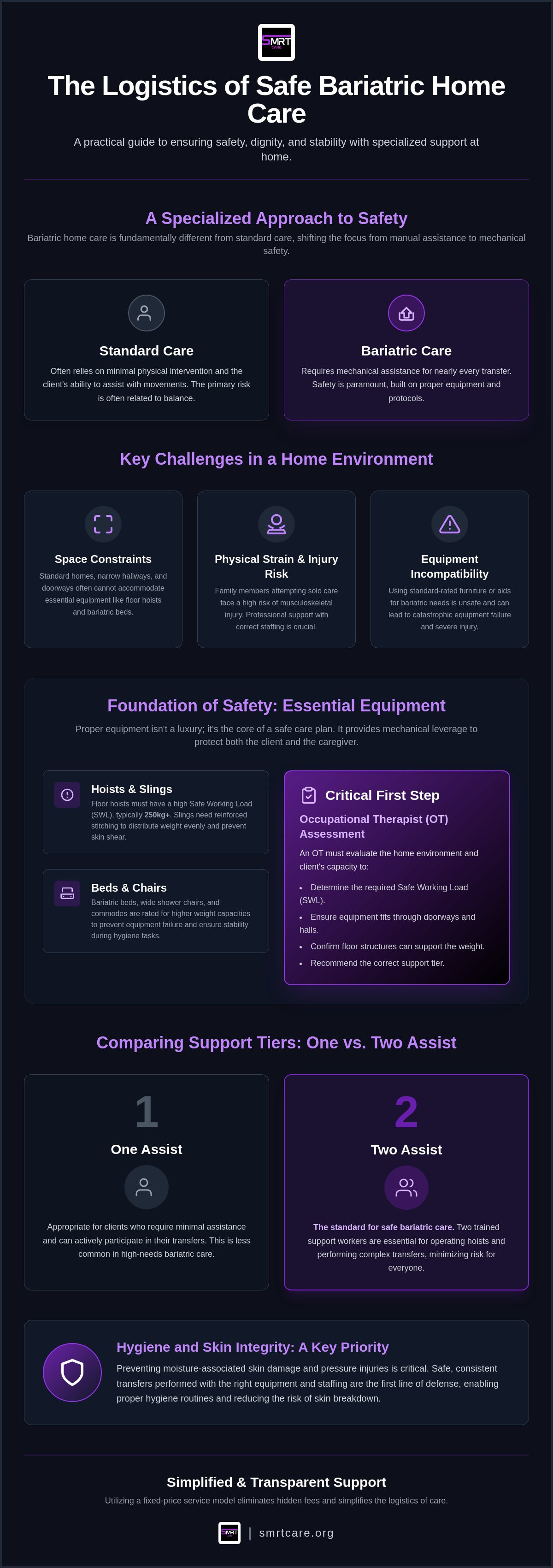
Safety in bariatric care isn't about physical strength; it's about mechanical leverage. Proper equipment is the foundation of home care for bariatric clients. It isn't a luxury or an optional add-on. Using standard-rated gear for bariatric needs leads to catastrophic equipment failure. This puts both the client and the caregiver at immediate risk of injury. Mechanical aids are designed to reduce the physical force required from support workers. Research into Safe Patient Handling Programs shows that using these devices significantly lowers the rate of work-related musculoskeletal disorders. In a home setting, these tools are even more critical due to confined spaces and uneven flooring.
The first step for Melbourne families is always a professional assessment. An Occupational Therapist (OT) must evaluate the home environment and the client's physical capacity. They determine the Safe Working Load (SWL) required for all devices. This assessment ensures that the equipment fits through doorways and that the floor can support the concentrated weight of a hoist and a client. If you're unsure about the staffing levels required for your specific equipment, booking a Two Assist Visit ensures you have the necessary personnel for a safe transfer.
Hoists and Slings
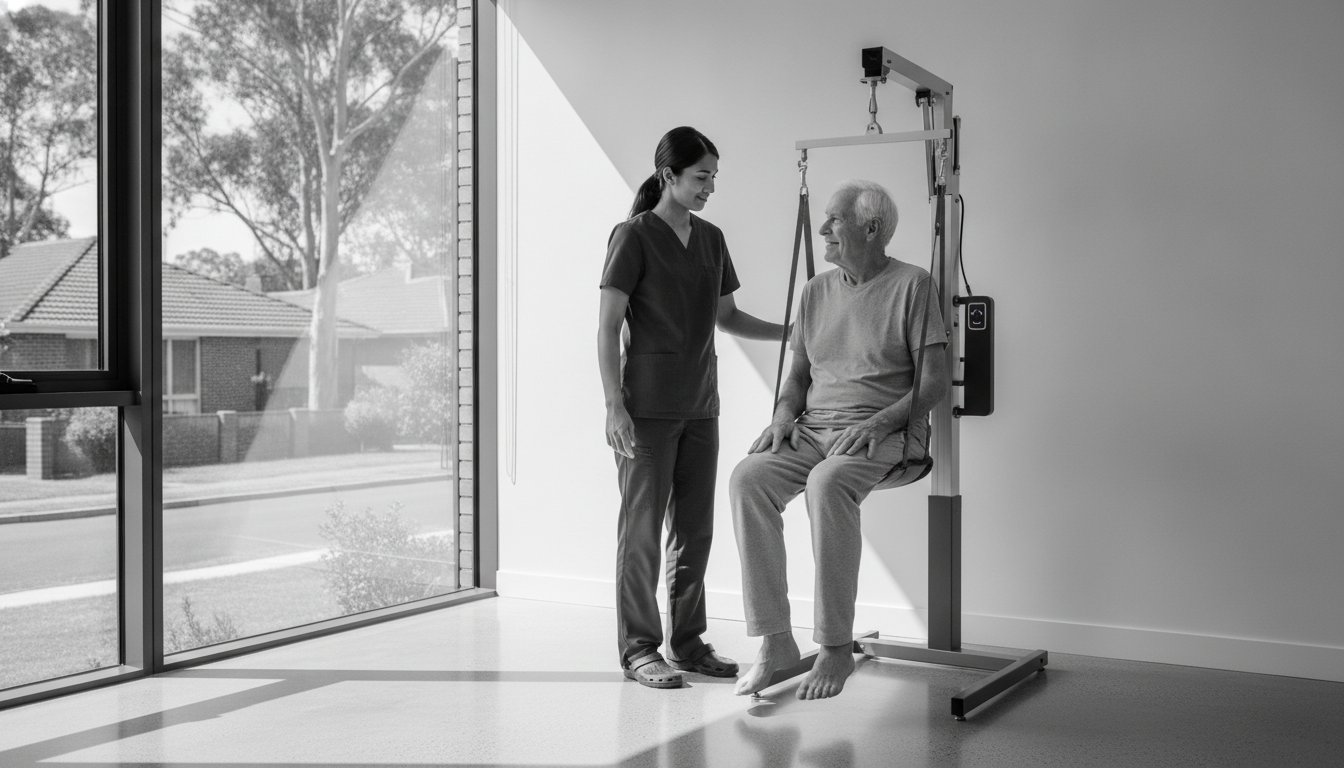
Floor hoists are common in home setups. They must have a high SWL, often starting at 250kg or higher for bariatric use. Never operate a hoist at its maximum limit; always leave a safety margin. Slings are equally important. A bariatric sling isn't just a larger version of a standard one. It features reinforced stitching and wider apertures to distribute weight evenly and prevent skin pinching. For permanent home setups where floor space is limited, ceiling track hoists are often the most efficient choice. They provide a smooth, predictable path for movement and reduce the footprint of the equipment in the room.
Mechanical Transfer Aids
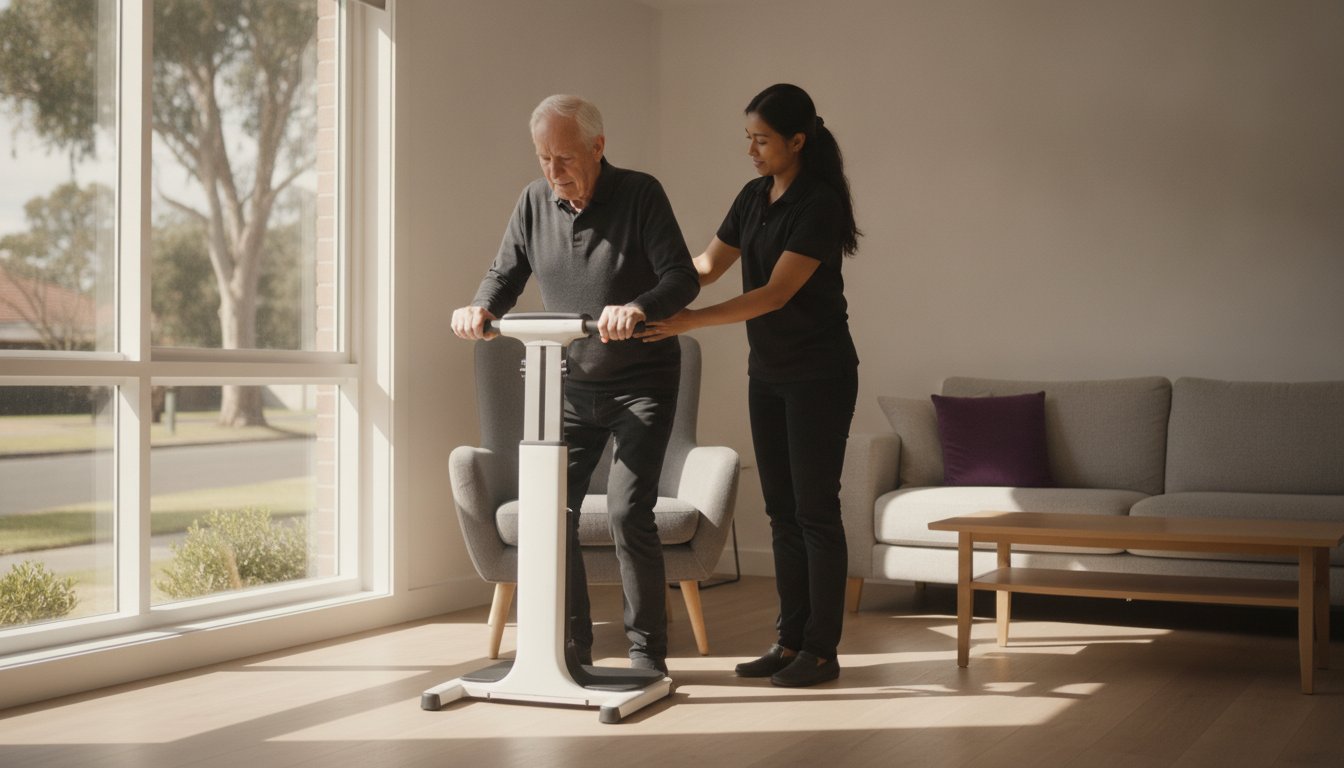
Not every transfer requires a full hoist. The Sara Stedy is a common mechanical aid for clients who can still weight-bear partially. it provides a stable platform for the client to pull themselves up while the caregiver maneuvers them. For clients who are bedridden, slide sheets are essential. These low-friction sheets allow caregivers to reposition a client in bed without lifting. This protects the client's skin from shearing and the caregiver's back from strain. It's important to understand that a Two Assist Visit is mandatory when using most mechanical hoists. One person is needed to operate the device while the second person guides the client and ensures the sling remains positioned correctly. This two-person protocol is the industry standard for preventing falls and maintaining dignity during the transfer process.
Comparing Support Tiers: One Assist vs. Two Assist
Determining the correct staffing level is a critical decision in home care for bariatric clients. SMRT Care categorises visits based on the level of physical assistance required to complete a task safely. This system eliminates ambiguity and ensures that the right resources are on-site before a transfer begins. We don't use vague descriptions of care; we use specific tiers that reflect the physical reality of the support needed. Understanding these tiers helps families manage budgets while maintaining a safe environment for both the client and the support worker.
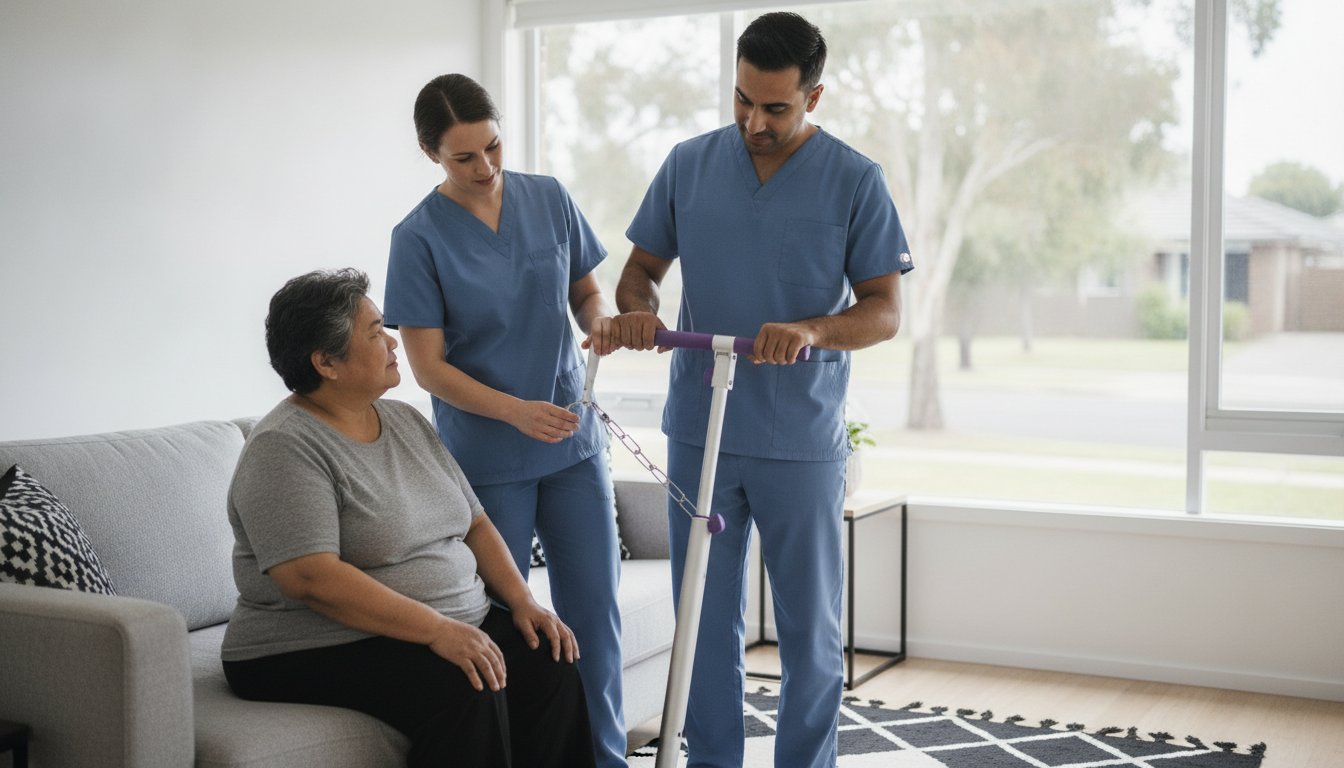
The distinction between tiers is based on the client's ability to weight-bear and move independently. A One Assist Visit is designed for clients who require guidance, steadying, or verbal prompting. They might need a hand to stand from a chair or help balancing while using a walker. In contrast, a Two Assist Visit is the industry standard for bariatric support involving mechanical aids. If a task cannot be performed safely by one person without risking a musculoskeletal injury, a second support worker is mandatory. This isn't a suggestion; it's a foundational safety requirement.
When is a Two Assist Visit Necessary?
Certain physical states and logistical requirements automatically trigger the need for a two-person team. You should expect a Two Assist Visit in the following scenarios:
- Non-ambulatory status: If the client is bedridden or unable to weight-bear even partially, two people are required for all repositioning and hygiene tasks.
- Mechanical lifting: Using a full-body hoist or a standing machine requires one person to operate the controls and another to guide the client's body.
- Complex hygiene: For thorough cleaning and skin inspections, one person must often support the client's limbs or torso while the second person performs the hygiene task.
Safety regulations in Victoria under the Occupational Health and Safety Act mandate that employers provide a safe work environment. For home care for bariatric clients, this often means two people are required to manage the physical load of a transfer. Attempting these tasks with a single worker increases the risk of equipment tipping or the client slipping from a sling.
The Safety Logic of the Two-Person Rule
The two-person rule provides a necessary redundancy during high-risk movements. One person focuses entirely on operating the mechanical equipment. The second person acts as a spotter and guide. They ensure the client's limbs are clear of the hoist frame and that the sling remains positioned correctly. This division of labour reduces the risk of falls during the "swing" phase of a transfer, which is when the client is suspended and most vulnerable.
This tiered approach ensures that support is proportional to the need. You can refer to our Basic Care Visit for Seniors guide to see how these specialized tiers differ from standard aged care visits. By following these protocols, we maintain the dignity of the individual while adhering to strict safety standards. It ensures that every visit is predictable, controlled, and safe for everyone in the home.
Hygiene and Skin Integrity: The Practical Tasks
Hygiene isn't a luxury. In the context of home care for bariatric clients, it's a foundational medical requirement. The physical reality of skin-on-skin contact creates environments where moisture-associated skin damage (MASD) thrives. If moisture is trapped in skin folds, it leads to irritation, fungal infections, and eventual skin breakdown. Professional support workers treat every hygiene session as an opportunity for clinical observation. They don't just wash; they inspect. They look for early signs of redness, heat, or pressure sores that could escalate into serious complications.
Maintaining dignity is a priority during these tasks. We avoid overly sentimental language and focus on professional efficiency. A structured routine reduces the time a client spends feeling vulnerable. By following a predictable sequence, support workers ensure that all areas are cleansed and, more importantly, dried thoroughly. This methodical approach is the most effective way to protect skin integrity in a home setting.
Showering Assistance and In-Bed Washes
Safe showering requires more than just a large bathroom. It requires specialized bariatric commodes or reinforced benches rated for the client's specific weight. When a mechanical transfer to the bathroom is too physically demanding, an in-bed wash is the most pragmatic choice. Support workers maintain a dignified environment by cleansing and drying one section of the body at a time while keeping the rest of the body covered with towels to preserve privacy. This method ensures thorough hygiene while conserving the client's energy for other activities.
Pressure Area Care
Pressure sores can develop quickly if a client remains in one position for too long. Repositioning isn't just about movement; it's about offloading weight from vulnerable areas. Support workers use slide sheets to shift the client's position without causing friction or shearing, which are major contributors to skin damage. Skin fold management is equally critical. This involves using specific drying techniques and monitoring for signs of infection. Every visit concludes with a formal documentation of the skin's condition. This record-keeping allows the care team to track changes over time and intervene before a minor irritation becomes a medical emergency.
To ensure your loved one receives this level of professional monitoring, you can book a Showering Assistance or In-bed Wash visit today.
Navigating Bariatric Home Care in Melbourne
Melbourne families often face significant administrative hurdles when seeking long-term support. Traditional aged care providers frequently bundle essential services with complex fee structures and hidden administrative costs. When managing home care for bariatric clients, this lack of transparency adds unnecessary stress to an already challenging situation. You need a model that prioritizes the physical requirements of the client without the overhead of a traditional agency. SMRT Care provides this through a fixed-price model that focuses exclusively on fundamental personal support.
Choosing a provider with a specific "Two Assist" specialty is a matter of safety compliance. In Victoria, workplace safety standards are strict regarding manual handling. Many generalist providers aren't equipped to manage the specific staffing and equipment needs of bariatric transfers. By selecting a specialist, you ensure that every visit is staffed correctly from the start. This prevents service cancellations and reduces the risk of injury to both your loved one and the support workers. Fixed-price packages also allow for predictable monthly budgeting, which is essential for families managing long-term care needs.
How to Get Started with SMRT Care
Starting a professional support routine doesn't have to be complicated. We use a straightforward process to ensure the service matches the physical reality of the home environment. Follow these steps to begin:
- Identify the physical state: Determine if the client is bedridden, non-ambulatory, or mobile with significant assistance. This dictates the level of gear and personnel required.
- Select the appropriate package: Choose between a One Assist Visit or a Two Assist Visit based on your OT assessment and equipment requirements.
- Schedule a visit: Establish a consistent routine to ensure skin integrity and hygiene are managed daily.
This structured approach ensures there's no ambiguity in the service delivery. It allows the home care for bariatric clients to remain focused on the tasks that matter most for health and stability.
Maintaining Dignity through Professional Support
Professional boundaries are a fundamental component of dignified care. When support workers maintain a high level of decorum, the client feels respected rather than "handled." This professional distance is intentional. It preserves the individual's sense of self while ensuring their physical needs are met with clinical precision. Pragmatic care isn't about ignoring the person; it's about respecting them enough to provide the highest standard of physical safety and hygiene.
Our focus remains on the essentials. We don't provide domestic cleaning or meal preparation. Instead, we dedicate every minute of the visit to the fundamental ADL support that maintains health and prevents hospital readmission. This disciplined approach ensures that your care funding is spent on the highest-priority needs.
View our fixed-price personal care packages for Melbourne families to see how we can support your specific requirements.
Securing Safe Support for Your Home
Safe home care for bariatric clients is built on two foundations: the right mechanical equipment and the correct number of trained personnel. You've learned that "Two Assist" visits are the safety standard for using hoists and managing complex hygiene. Prioritizing skin integrity through professional routines is not just about comfort; it's a vital preventative measure against serious complications. By following these protocols, you can transform a high-risk environment into a stable and dignified one.
SMRT Care offers a straightforward solution for Melbourne families. Our local support team specializes in manual handling and two-person assists. We provide clear, fixed-price packages with no hidden fees or complex contracts. This transparency allows you to focus on the quality of support rather than administrative paperwork. Book a fixed-price Two Assist Visit for safe bariatric support to establish a reliable routine for your loved one. You don't have to manage these logistical challenges alone. With the right professional partner, safe and dignified support is achievable every day.
Frequently Asked Questions
Is home care safe for very heavy bariatric clients?
Home care for bariatric clients is safe if the environment is professionally assessed and equipped. The safety of the transfer depends on the Safe Working Load (SWL) of your mechanical aids and the capacity of the floor to support the concentrated weight. Our team follows strict manual handling protocols to eliminate the risk of caregiver or client injury. If your home setup meets these technical standards, high-level support is achievable.
How many caregivers are needed for a bariatric transfer?
Two caregivers are the industry standard for any transfer involving a mechanical hoist or standing machine. This two-person protocol ensures that one worker can focus entirely on operating the device while the other guides the client safely. Using only one person for a bariatric transfer is a significant safety breach. It increases the risk of falls and equipment failure. Our Two Assist Visit tier is designed for these specific scenarios.
What equipment do I need to buy before starting home care?
You don't need to purchase all gear immediately; many families opt for long-term hire. Essential items include a bariatric bed, a high-capacity floor hoist, and reinforced slings with wider apertures. You'll also require bathroom aids like a reinforced shower commode and slide sheets for repositioning. An Occupational Therapist will provide a specific list of requirements that are rated for the client's weight and fit your home layout.
Does SMRT Care provide two-person assistance in all Melbourne suburbs?
SMRT Care provides specialized support throughout various Melbourne suburbs. Our Two Assist visits are designed specifically for households requiring manual handling expertise and mechanical equipment. Because our team is local, we can maintain a consistent schedule for our clients. You should contact us directly to verify if your specific suburb is within our current operational zone and to check for current staff availability.
Can I use my own hoist with SMRT Care support workers?
You can use your own hoist as long as it is in good working order and has a valid maintenance history. Support workers will conduct a brief visual inspection of the equipment and slings before each use. If the equipment appears damaged or is rated below the client's current weight, we can't proceed with the transfer. This policy protects everyone involved and ensures that we maintain professional safety standards.
What happens if my home is too small for a bariatric hoist?
If space constraints prevent the use of a hoist, we pivot to in-bed care solutions. We can perform thorough In-bed Washes and hygiene tasks without requiring a transfer to the bathroom. This approach maintains the client's health and skin integrity while working within the physical limitations of the home environment. It's a common and pragmatic solution for older Melbourne houses with narrow hallways or small bathrooms.
Are bariatric home care services covered by NDIS or My Aged Care?
Most bariatric services are eligible for funding through the NDIS or the Support at Home program. If you have a permanent disability or are over the age of 65, you can use your government funding to cover these visits. SMRT Care offers transparent, fixed-price options that make it easier to manage your funding budget. We don't use complex contracts, so you can adjust your care levels as your funding changes.
How much does a two-assist visit cost compared to a basic visit?
A Two Assist Visit is priced higher than a One Assist or basic visit because it involves two professional staff members. This tier is essential for clients who can't weight-bear and require mechanical lifting. While the cost is higher, it ensures full compliance with Victorian safety regulations. Our fixed-price structure helps you plan your weekly care expenses with total certainty and eliminates the fear of hidden administrative fees.