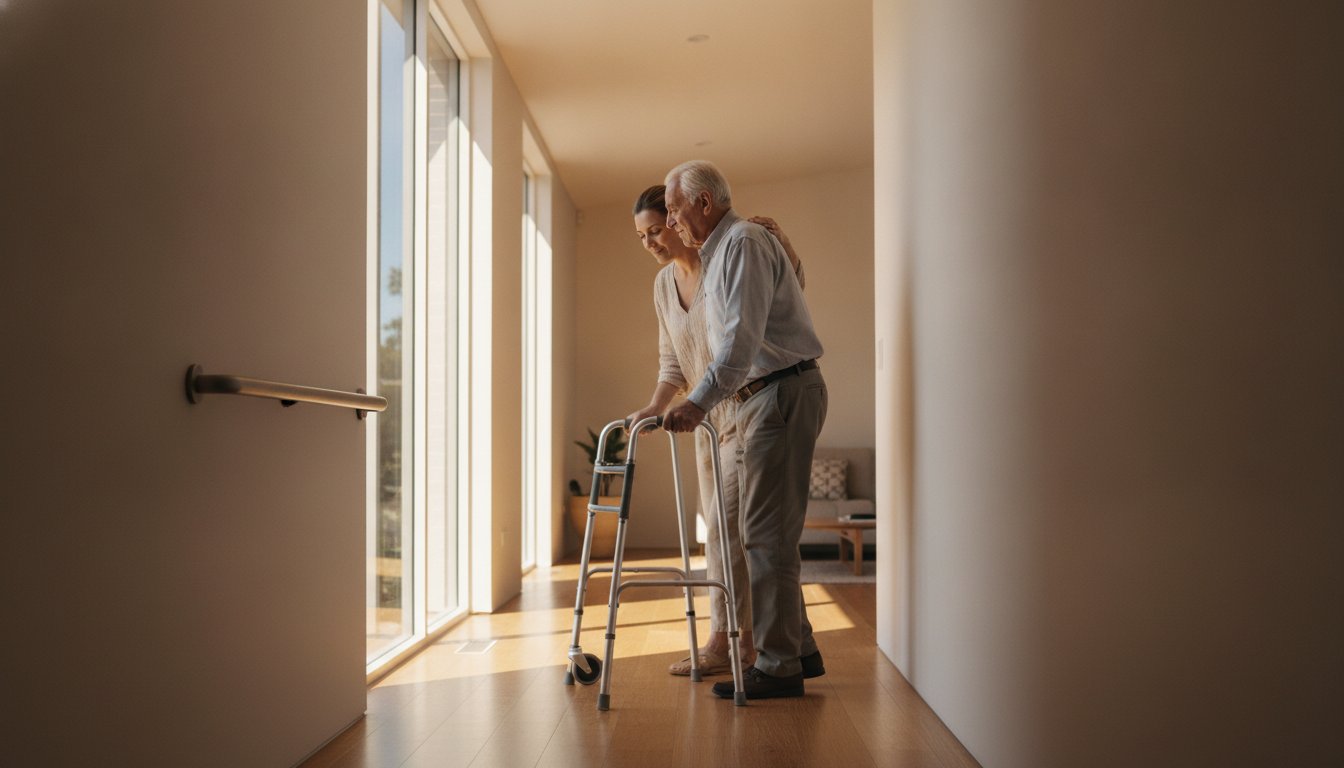
Last Tuesday, you noticed your father gripping the hallway wall just to reach the kitchen. It is a quiet moment that changes everything, sparking a deep fear of a hip fracture or a middle-of-the-night emergency. You want him to stay independent, but the constant worry of not being there every second is exhausting. Providing effective home care for seniors with falls risk does not mean hovering 24/7. It means building an environment that supports their mobility through practical changes and structured support.
It is normal to feel overwhelmed by clinical terms like manual handling or the recent shifts in the Australian Support at Home program. You want a clear plan that maintains your loved one's dignity without sacrificing their safety. This guide provides a pragmatic, room-by-room checklist to identify hazards in a Melbourne home. We will explain how structured personal care, such as showering assistance or specific assist tiers, fits into a daily routine to reduce the likelihood of a fall. You will gain a straightforward strategy to manage risks while keeping daily life predictable and secure.
Key Takeaways
- Conduct a room-by-room audit to identify environmental hazards and relocate essential items to waist-height for safer access.
- Learn why hygiene and dressing are high-risk periods and how structured home care for seniors with falls risk reduces these dangers.
- Clarify the difference between "One-Assist" and "Two-Assist" tiers to ensure physical support matches current mobility levels.
- Shift from a reactive crisis response to a proactive prevention schedule using short-term visits for real-time safety assessments.
- Focus on fundamental daily support that prioritizes both physical stability and the individual's personal dignity.
Understanding Falls Risk for Seniors: A Pragmatic Overview
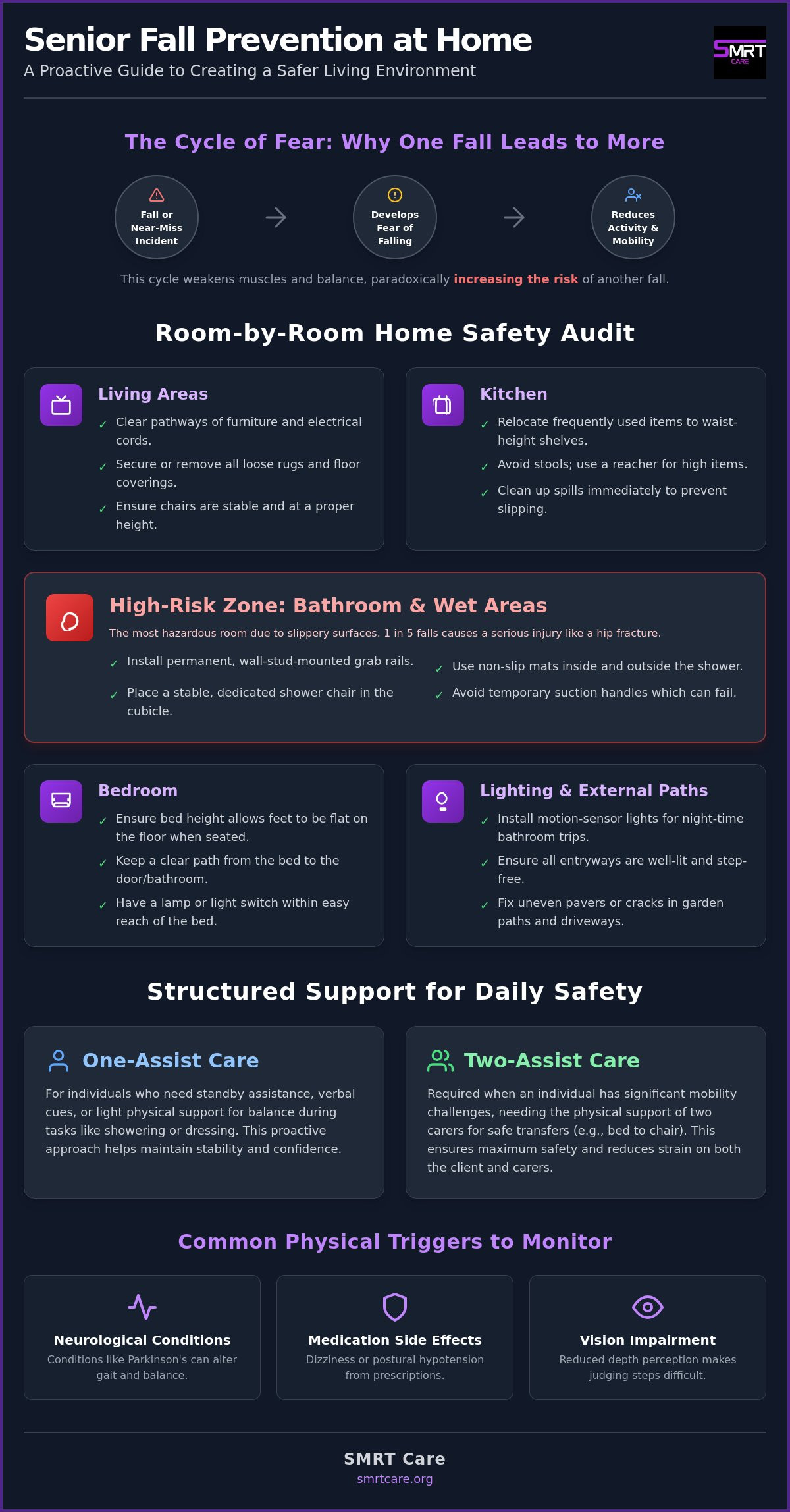
Falls risk is not a vague concept. It is the measurable intersection of a person’s physical stability and the hazards within their living space. In Australia, falls are the primary cause of injury-related hospital admissions for older adults. A single incident often triggers a rapid decline in independence. This happens because the physical injury is frequently followed by a psychological "fear of falling." This fear leads many seniors to restrict their own movement. When activity levels drop, muscle mass decreases and balance worsens. This creates a cycle where the attempt to stay safe actually increases the likelihood of a future injury.
Professional home care for seniors with falls risk identifies these triggers before they lead to an emergency. This involves assessing how a senior interacts with their environment during high-risk times, such as morning routines or late-night bathroom trips. Implementing proven fall prevention strategies involves more than just installing a grab rail. It requires a structured approach that combines environmental changes with consistent physical support to maintain stability during daily tasks.
Common Physical Triggers of Falls
Physical capacity changes as we age, but specific clinical factors often accelerate the risk. Neurological conditions like Parkinson’s disease can alter gait patterns, making it difficult to clear small obstacles like rug edges. Medication side effects are another major factor. Many common prescriptions for blood pressure or sleep can cause sudden dizziness or postural hypotension. Additionally, vision impairment reduces depth perception. This makes it harder to judge the height of a step or the distance to a chair. Identifying these triggers allows for a more targeted care plan that addresses the specific physical limitations of the individual.
The Psychology of Falls Prevention
There is a natural tension between a senior’s desire for independence and the practical need for safety. Many seniors view accepting help as a loss of autonomy. However, structured support actually preserves independence by preventing the catastrophic injuries that lead to residential aged care. For family carers, the cognitive load of constant monitoring is significant. Professional home care for seniors with falls risk alleviates this burden. It provides a reliable framework where safety is managed through a schedule, not through constant surveillance. This approach maintains the senior’s dignity by treating personal assistance as a fundamental requirement for a high-quality, stable life at home.
Environmental Safety: A Room-by-Room Home Audit Checklist
Home modifications are a foundational part of effective home care for seniors with falls risk. A house that was safe ten years ago might now be full of obstacles. Hazards often hide in plain sight; a rug that never moved before is now a tripping hazard for someone using a frame. According to CDC facts on senior falls, one out of five falls causes a serious injury such as a hip fracture or head trauma. Reducing these risks starts with a methodical walkthrough of every room.
- Living Areas: Clear all thoroughfares of furniture and electrical cords. Secure loose floor coverings with non-slip backing or remove them entirely.
- Kitchen: Relocate frequently used items, such as kettles and mugs, to waist-height shelves. Avoid the need for reaching high or bending low.
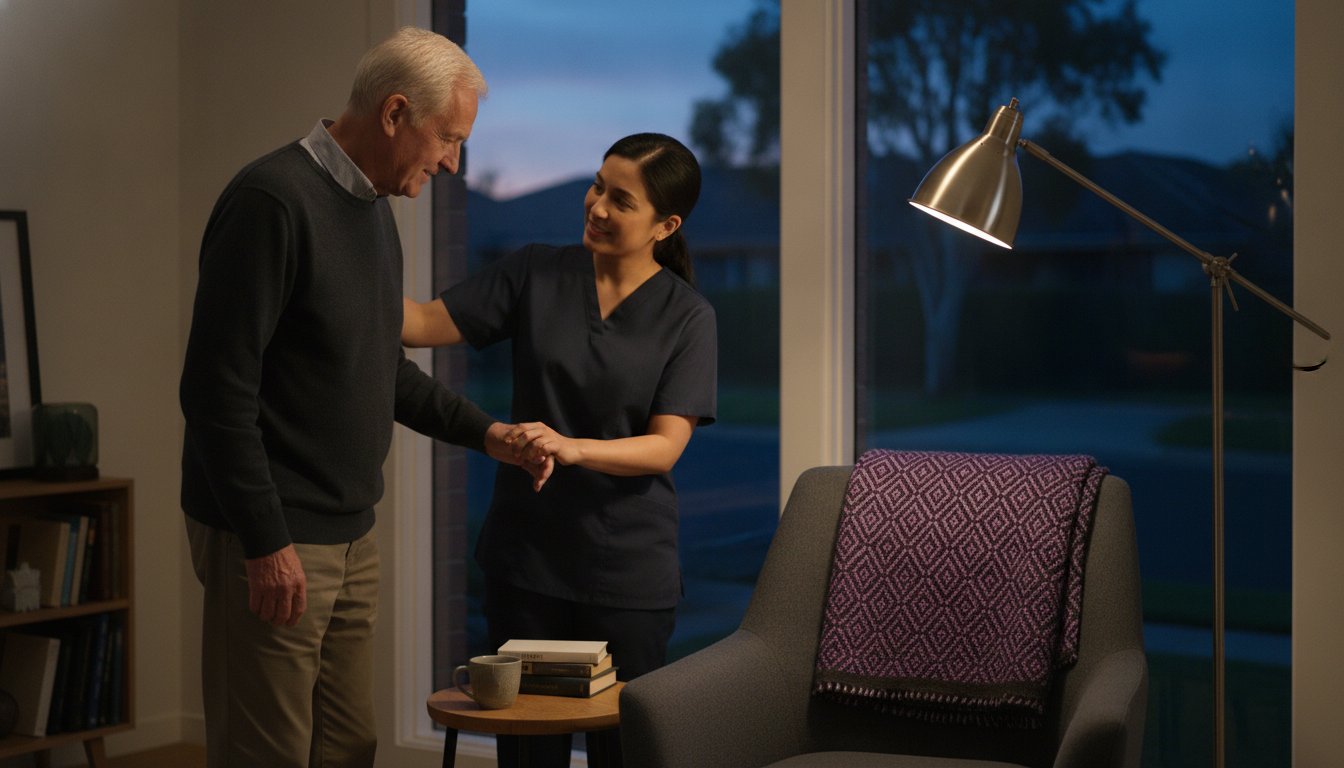
- Lighting: Ensure high-visibility paths for nocturnal bathroom trips. Install motion-sensor lights in hallways and near the bed.
- External: Address uneven pavers on garden paths. Ensure at least one entry point to the home is step-free and well-lit.
A Basic Care Visit can provide an extra pair of eyes to spot these environmental issues during daily routines. Identifying a hazard is the first step; removing it is the second.
The High-Risk Zone: Bathroom and Wet Areas
The bathroom is the most hazardous room in the home due to slippery surfaces and the physical effort required for hygiene. Install permanent grab rails into wall studs. Avoid temporary suction handles; they often fail under full body weight. Use non-slip treatments for tiles and place a stable shower chair in the cubicle. Managing the transition from bed to bathroom in the early morning is critical. This is when blood pressure may be unstable and balance is often at its lowest.
Bedroom Safety and Bedside Logistics
Bed height should allow the senior to sit with their feet flat on the floor and knees at a 90-degree angle. This ensures a safe, controlled standing motion. Clear all clutter around the bedside to prevent tripping during bedtime assistance for seniors. Keep a stable, reachable surface nearby for water, phones, and glasses. A sturdy lamp or touch-activated light should be within arm's length to ensure no one has to navigate the room in the dark. Simple logistical changes significantly reduce the cognitive load and physical strain of evening routines.
Safe Daily Routines: Managing High-Risk Personal Care Tasks
Environmental modifications are only half the solution. Most falls occur during "wet" personal care tasks like showering or toileting. These activities require complex movements: stepping over a shower hob, reaching for soap, or balancing on one leg to dry off. For someone with reduced physical capacity, these moments are high-risk. Professional home care for seniors with falls risk addresses this by providing physical support exactly when it's needed most. This prevents the "crisis" moments that often lead to hospitalisation.
Transitioning from independent showering to assisted care is a proactive step. It isn't a loss of independence; it's a strategy to maintain it. A basic care visit for seniors acts as a safety net. The attendant ensures the environment is ready and provides the steadying hand required to complete the task without incident. Beyond the physical act, this support involves making your home safer by managing the specific logistics of daily life.
Assisted Showering and Hygiene
Safe showering requires careful management of temperature and physical effort. Hot water can cause blood vessels to dilate, leading to a sudden drop in blood pressure and dizziness. Care attendants monitor these conditions. They provide physical bracing and ensure the senior uses a shower chair correctly. On days when mobility is particularly low or fatigue is high, an In-bed Wash is a safer alternative. This maintains hygiene while removing the risk of a fall in a wet area. Managing morning fatigue is essential. Overexertion during a shower often leads to a fall later in the morning when energy levels dip.
Dressing and Footwear Selection
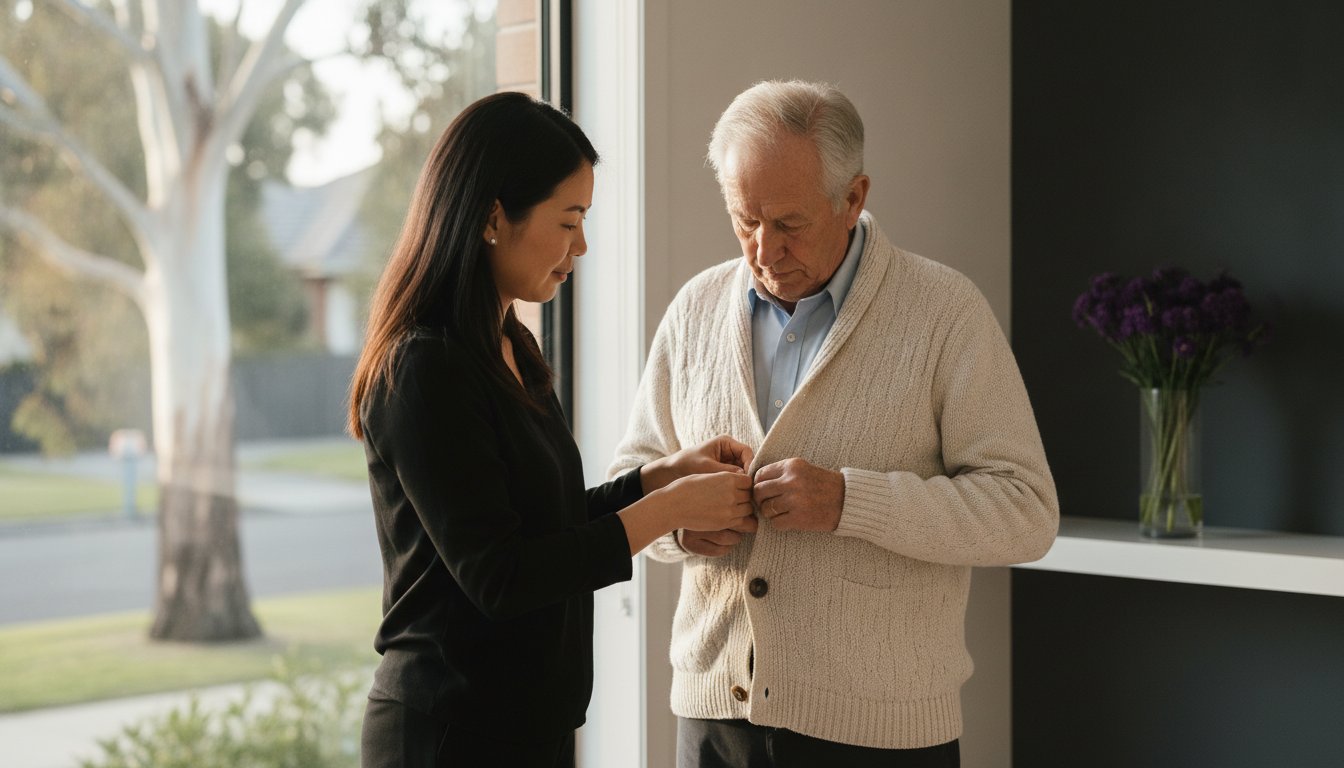
Dressing is a high-effort task that often involves standing on one leg or leaning forward. These movements challenge a senior's balance. Adaptive clothing, such as front-fastening garments or elastic waistbands, reduces this strain. Footwear selection is equally important. Many seniors choose slippers for comfort, but these often lack the grip and heel support needed for stability. A care attendant ensures that clothing is fitted correctly and that footwear is secure. This simple check prevents trips caused by loose hems or poorly fitted shoes, keeping the senior stable throughout the day.
Manual Handling and Mobility Aids: Reducing Physical Strain
Manual handling is the use of specific techniques and equipment to move a person safely. In the context of home care for seniors with falls risk, it is a critical strategy to prevent both the senior and the carer from sustaining injuries during daily transitions. Professional manual handling personal care support ensures that movements like moving from a bed to a chair are controlled and predictable. Without these structured techniques, the risk of a sudden loss of balance increases. Using the right equipment doesn't just prevent falls; it protects the physical health of everyone involved.
If you are managing a complex mobility situation at home, you can book a Two Assist Visit to ensure that high-risk transfers are handled with the highest level of safety and professional oversight.
Common Mobility and Transfer Equipment
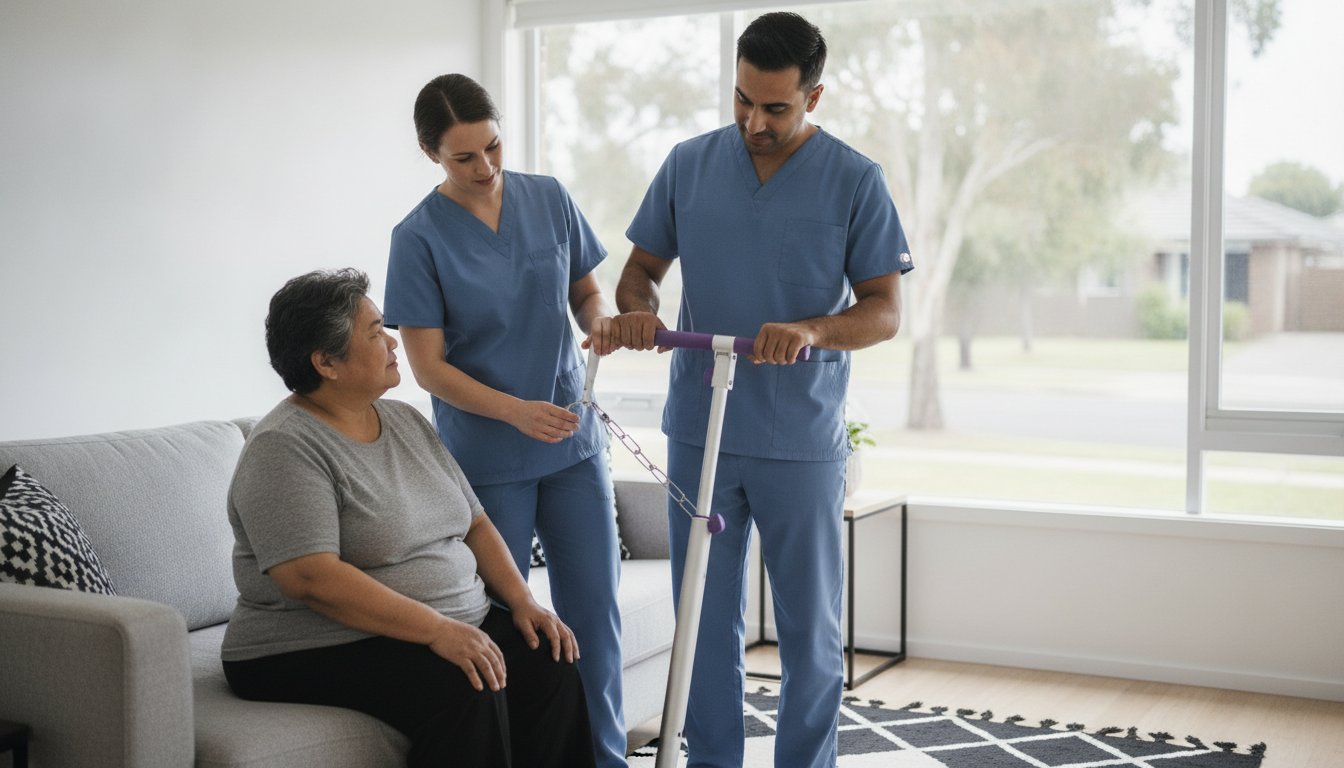
High-quality mobility aids bridge the gap between a senior's physical capacity and their daily requirements. A Sara Stedy is a common sit-to-stand aid. It allows a senior to participate in the transfer while remaining securely braced and supported. For non-ambulatory seniors, hoists and slings are necessary to eliminate the risk of a fall during a full transfer. In the bedroom, slide sheets facilitate safe repositioning without the need for lifting. These tools reduce friction, which prevents skin tears for the senior and back strain for the support worker. Professional training is essential. Slings must be fitted with clinical precision to ensure they don't slip during use.
When is "Two-Assist" Support Necessary?
Determining the level of support required is a matter of safety, not preference. A "One-Assist" scenario involves a senior who can bear some weight but requires a single trained worker to guide the transfer or operate basic equipment. A "Two-Assist" visit is required when the senior has minimal weight-bearing capacity. It is also necessary when specific manual handling equipment, like certain floor hoists, requires two trained operators to function safely. This tier ensures the senior is stabilized from multiple points during the movement. While families often look for cost-effective care packages, safety is the primary priority. Under-assisting a high-risk senior leads to accidents that are far more costly than an extra support worker.
Implementing Home Care Support: Structured Assistance in Melbourne
Effective home care for seniors with falls risk requires a shift in mindset. Many families wait for a fall before seeking professional help. This reactive approach is a crisis response that often leads to permanent loss of mobility. A prevention schedule identifies risks before they result in hospitalisation. Under the Australian Support at Home program launched in late 2025, accessing these services has become more structured. Short term personal care visits allow a trained professional to assess mobility in real-time. This reveals specific triggers, such as fatigue during a morning shower or instability when navigating a dark hallway, allowing for immediate adjustments to the care plan.
Transparency is essential for long-term planning. Fixed-price care packages provide clarity for families managing a Support at Home budget. They remove the stress of hidden fees or fluctuating administrative costs. This allows families to focus on the quality of support rather than financial uncertainty. A pragmatic safety assessment is the first step toward a stable home life. It ensures that the level of assistance, such as Showering Assistance or specific transfer support, matches the senior's actual physical requirements.
Creating a Consistent Care Schedule
Every household has danger hours. These are usually early mornings when blood pressure is low or late evenings when fatigue is high. A consistent care routine maintains physical strength and balance. Regular, assisted movement during daily tasks keeps joints mobile and reduces the "fear of falling" cycle. If you notice changes in gait or increased clutching of furniture, communicate these shifts to your care team immediately. This ensures the support tier, whether a Basic Care Visit or a Two Assist Visit, remains appropriate for the senior's current mobility level.
Choosing a Local Melbourne Provider
Local knowledge is a practical advantage for Melbourne families. A local provider understands the specific environment and can ensure reliable scheduling for high-risk routines. When selecting an attendant, look for professional training and a grounded approach to safety. They should prioritize foundational needs like hygiene and mobility support while maintaining the senior's dignity. SMRT Care provides transparent, tiered support designed to reduce hazards and maintain stability at home. Contact SMRT Care for a straightforward discussion about your home safety needs and to book a practical assessment.
Securing Long-Term Independence at Home
Managing a home environment requires more than just removing loose rugs. It involves a systematic approach to daily routines. You now have a practical checklist to identify environmental hazards and a clear understanding of why high-risk tasks like showering require professional intervention. Effective home care for seniors with falls risk shifts the focus from reacting to injuries to preventing them through structured, scheduled assistance. This proactive strategy preserves autonomy while reducing the physical and cognitive load on family carers.
SMRT Care offers tiered support specifically for Basic, One-Assist, and Two-Assist requirements. Our specialized manual handling expertise ensures that every transfer is controlled and safe. We prioritize pragmatic, fixed-price service delivery so you can manage your Support at Home budget with total transparency. View our transparent, fixed-price personal care packages in Melbourne to find a solution that fits your specific needs. Taking these practical steps today builds a foundation of safety that allows your loved one to remain at home with confidence and dignity.
Frequently Asked Questions
What are the first signs that a senior is at a high risk of falling?
The first signs include "furniture walking," where a senior grips walls or furniture for stability, and unexplained bruising on the arms or legs. Difficulty rising from a low chair or a noticeable decrease in walking speed also indicates reduced physical capacity. These subtle changes often precede a major incident. They suggest a need for a formal safety assessment to identify specific triggers in the home environment.
Can home care really prevent falls if my parent lives alone?
Structured home care for seniors with falls risk reduces incidents by providing physical support during high-risk windows, such as morning hygiene routines. While an attendant isn't there 24/7, their presence during transitions ensures that dangerous tasks like showering are supervised. Regular visits also allow for ongoing monitoring of the home environment. This ensures that new hazards, such as clutter or loose rugs, are removed before they cause an accident.
What is the difference between a one-assist and a two-assist care visit?
A One-Assist Visit involves a single care worker supporting a senior who can still bear some weight but requires a steadying hand. A Two-Assist Visit requires two trained workers to manage transfers for seniors with minimal weight-bearing capacity. This tier is also necessary when using specific floor hoists that require two operators for safety. Choosing the correct tier ensures maximum stability during complex movements and prevents injuries to both the senior and the carer.
Does NDIS or My Aged Care cover falls prevention personal care?
Both My Aged Care and the NDIS cover personal care services related to falls prevention. Under the Support at Home program introduced in November 2025, personal care is categorized to ensure seniors receive appropriate funding for daily stability. You should check your specific plan or budget to confirm how many hours of assisted showering or manual handling support are allocated. These services are essential for maintaining a safe environment and preventing hospital admissions.
What equipment should I buy first to prevent falls in the bathroom?
Priority should be given to professionally installed grab rails and a high-quality shower chair. Grab rails must be bolted into wall studs; suction-based handles are unreliable and often fail under full body weight. A shower chair reduces the fatigue associated with standing on wet, slippery surfaces. This is a primary trigger for slips during hygiene routines. These two items provide the most immediate improvement to bathroom safety for seniors with limited mobility.
How do I talk to my parent about needing help with their morning routine?
Frame the conversation around maintaining independence rather than admitting a weakness. Explain that structured support for high-risk morning routines is a strategy to avoid a hospital admission or a move to residential care. Using a pragmatic approach, focus on the specific logistical benefits of a care visit. Explain how it makes the morning faster and less exhausting, allowing them to save their energy for activities they actually enjoy.
Are there specific exercises seniors can do at home to reduce falls risk?
Seniors can improve stability through resistance training and targeted balance exercises like heel-to-toe walking. Simple movements like sit-to-stand repetitions from a sturdy chair help maintain the leg strength needed for safe transfers. Consistent physical activity is essential to combat age-related muscle loss. Improving physical strength directly reduces the likelihood of a fall by ensuring the senior has the capacity to recover their balance if they trip.
What should I do immediately after my elderly parent has a fall at home?
Do not attempt to lift the person immediately, as this can cause further injury to both of you. Check for consciousness and visible signs of fracture or head trauma first. If they are in pain, confused, or cannot move, call 000 immediately. If they appear uninjured, use a stable chair and proper manual handling techniques to assist them up slowly. Monitor them closely for the next 24 hours for delayed symptoms like dizziness or nausea.